As part of its ILS25bn (US$7.1bn) economic plan to recover from the impact of the COVID-19, the Israeli government plans to invest ILS6.5bn (US$1.9bn) to instal of 2 GW of additional solar power capacity. The government plans ILS3.5bn (US$1bn) of loans and ILS500m (US$143m) of state guarantees for solar project developers. It plans to relaunch the tender of the Dimona solar project in the Negev desert, whose capacity will be extended from 300 MW to 500 MW. The tender, which was launched in January 2020 but cancelled one month later over land problems, is expected to mobilise around ILS1bn (US$286m) of investments. The government also intends to cut red tape and improve grid-connection for renewable projects and approved a ILS1.2bn (US$342m) initiative for a 190 MW wind park built by private companies Nextcom Group and Minarb on the Golan Heights.
The government's plan also continues to support gas projects in the Mediterranean Sea and includes ILS180m (US$51m) for research and development into cleaner fuels for transport, including gas for heavy vehicles. It also aims at building a new fuel storage in Haifa (ILS600m, i.e. US$171m) and at improving the electricity distribution network.
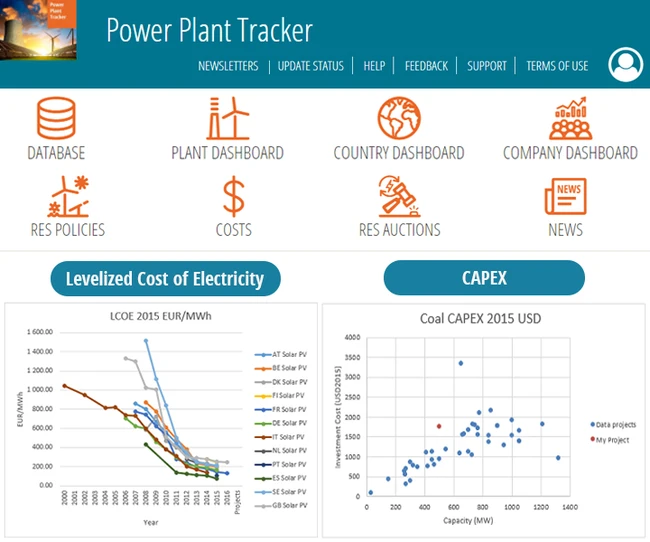
Searching for proven generation costs?
Then CAPEX & LCOE is the database you need. The module provides exclusive insights on both Capital Expenditure and Levelised Cost of Electricity.
Make informed decisions in terms of which technologies to invest in and where. In just a few clicks, access unique, premium data on both thermal and renewable power generation costs by technology and by country. Put our detailed, reliable information to use and benchmark your project.