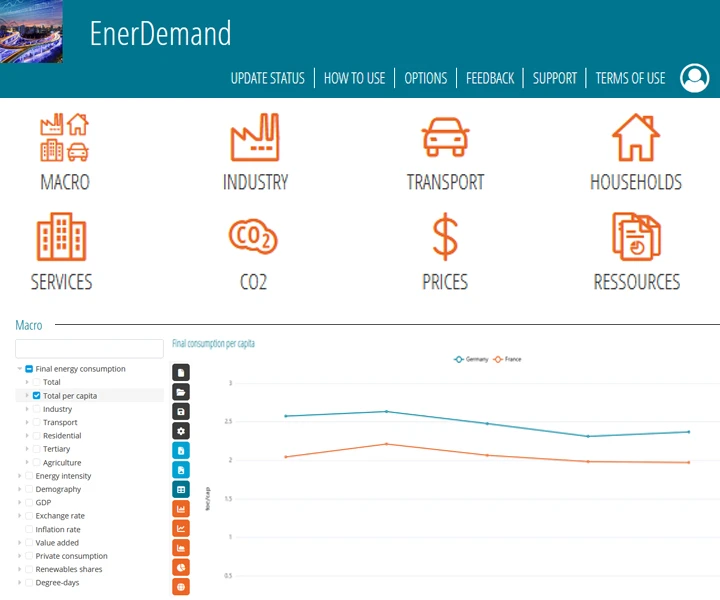
Our Energy Efficiency and Demand database provides a unique selection of data to monitor energy efficiency trends and access detailed information for the world’s most energy-consuming countries and European countries. Access exclusive energy efficiency indicators and detailed energy consumption data by end use through the industry, residential, transport, and services sectors and sub-sectors, as well as underlying drivers.
Whether you are a policy maker, a researcher, an investor, or a banker, we facilitate your quest for the greenest usages, sectors and industrial branches across countries, and the answers to questions such as:
- What is the energy consumption by end-uses (space heating, lighting, electricity appliances, etc.) of households in a given country?
- What is the vehicle stock?
- What are the energy savings of a specific sector?
Why Subscribe?
- Unique energy efficiency indicators, including specific currency-based intensities
- Premium data from governmental agencies
- Global and European coverage
- Regular updates
- Robust data collection methodology
- Consistent and continuous series for easy benchmarks
- Intuitive online interface
- Query savings and Excel exports to regularly fuel your models and analysis
- Assistance from Enerdata’s energy efficiency and demand experts
Key Features
- Detailed energy consumption by sector and end-use: transport (by vehicle type), residential and service buildings (by end-use) and industry (by branch), and their drivers (e.g. number of households, stock of vehicles and more)
- Extensive socio-economic and financial context (including energy expenditures per household, electrification rates, employment figures)
- Detailed fuel-specific consumption for service end-uses
- CO2 emissions (direct and indirect)
- Advanced data request and analysis interface
- Historical annual time series
- 24/7 online access
- Unlimited exports (.xls or .csv*) to integrate in your own databases and models
- Geographical coverage: 27 EU Member States + 13 other European countries (including the UK and Türkiye) + the top 20 countries among the most energy-consuming + aggregates
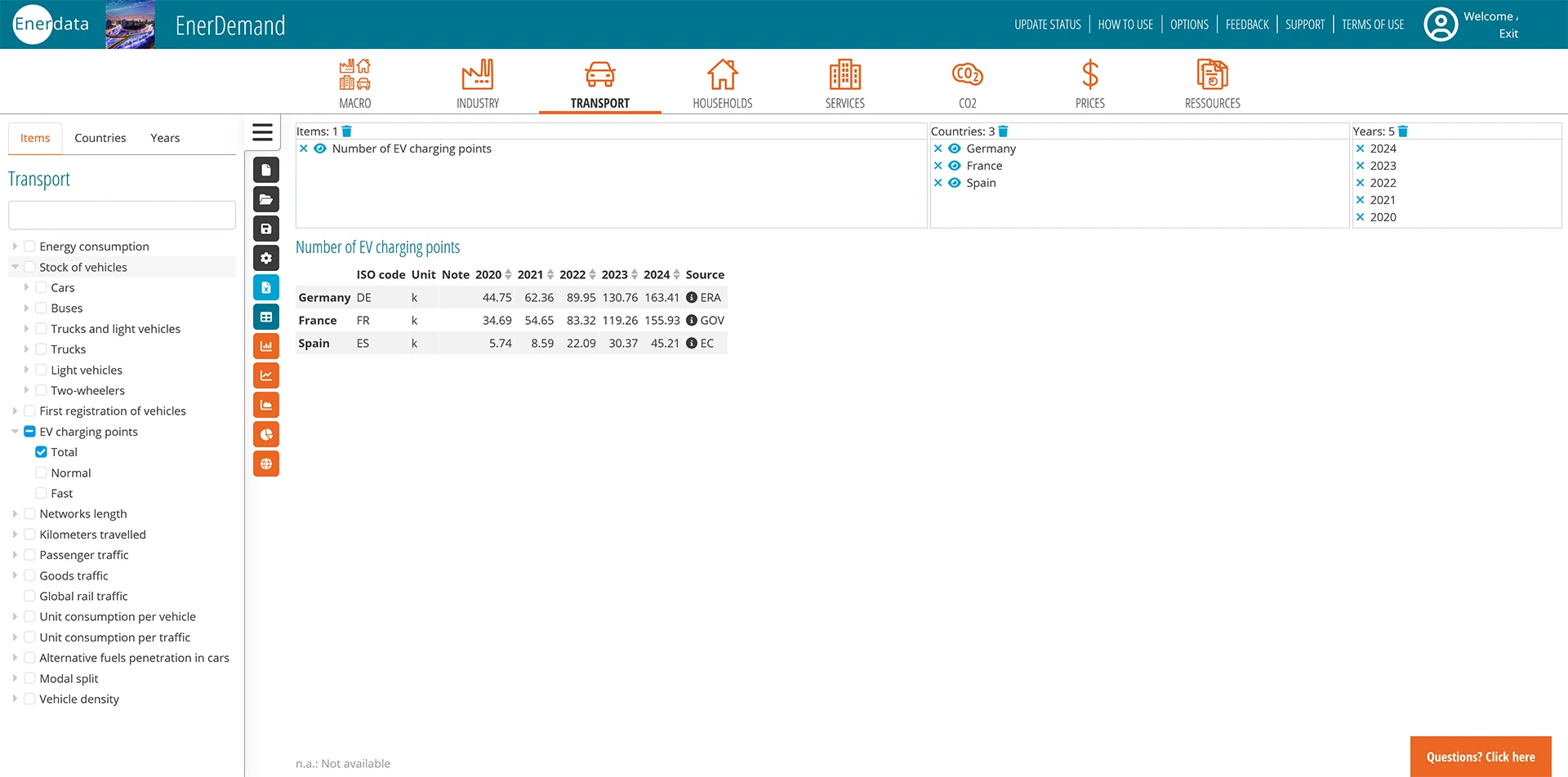
Transport: Number of EV charging points in three European countries
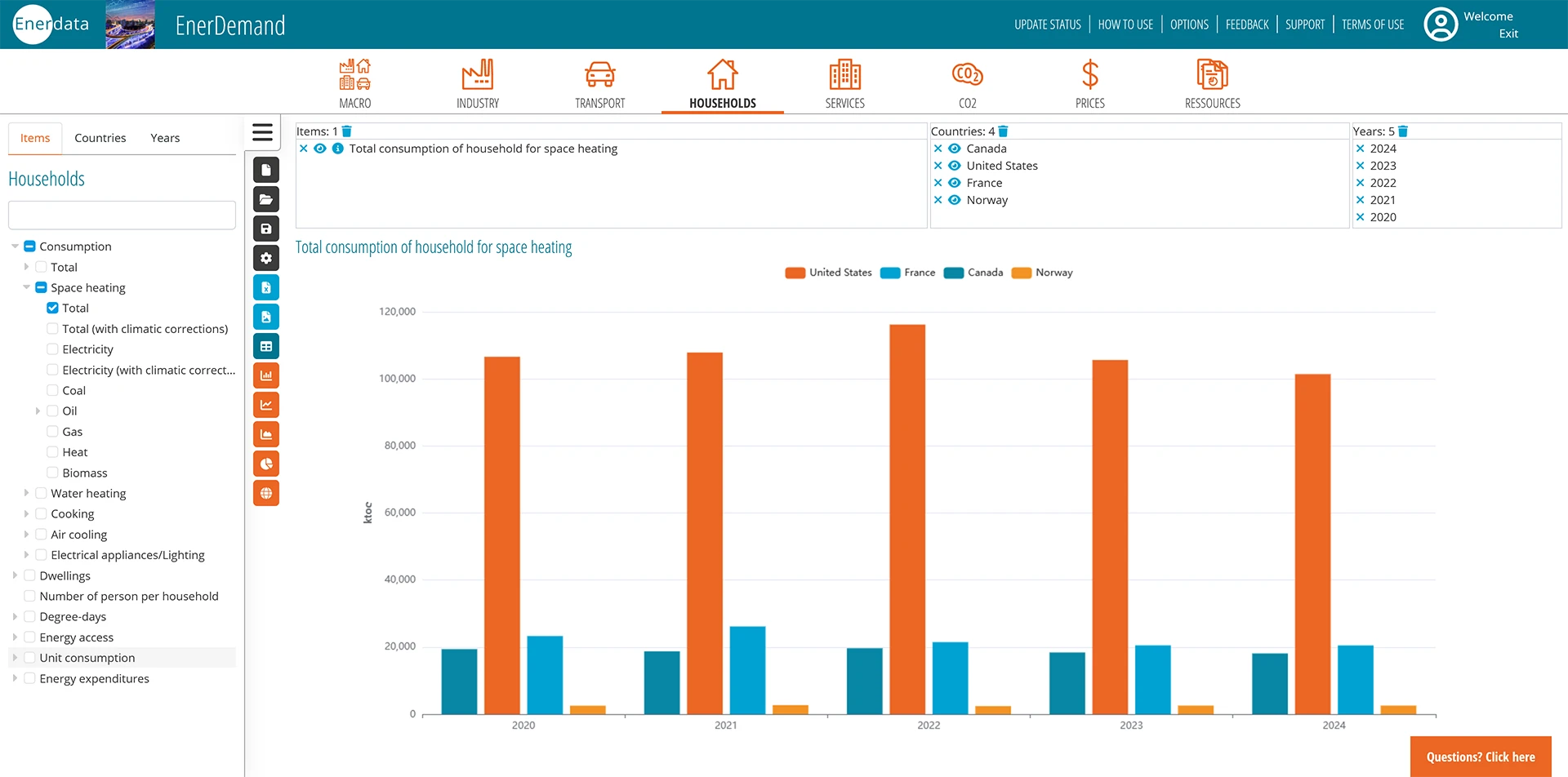
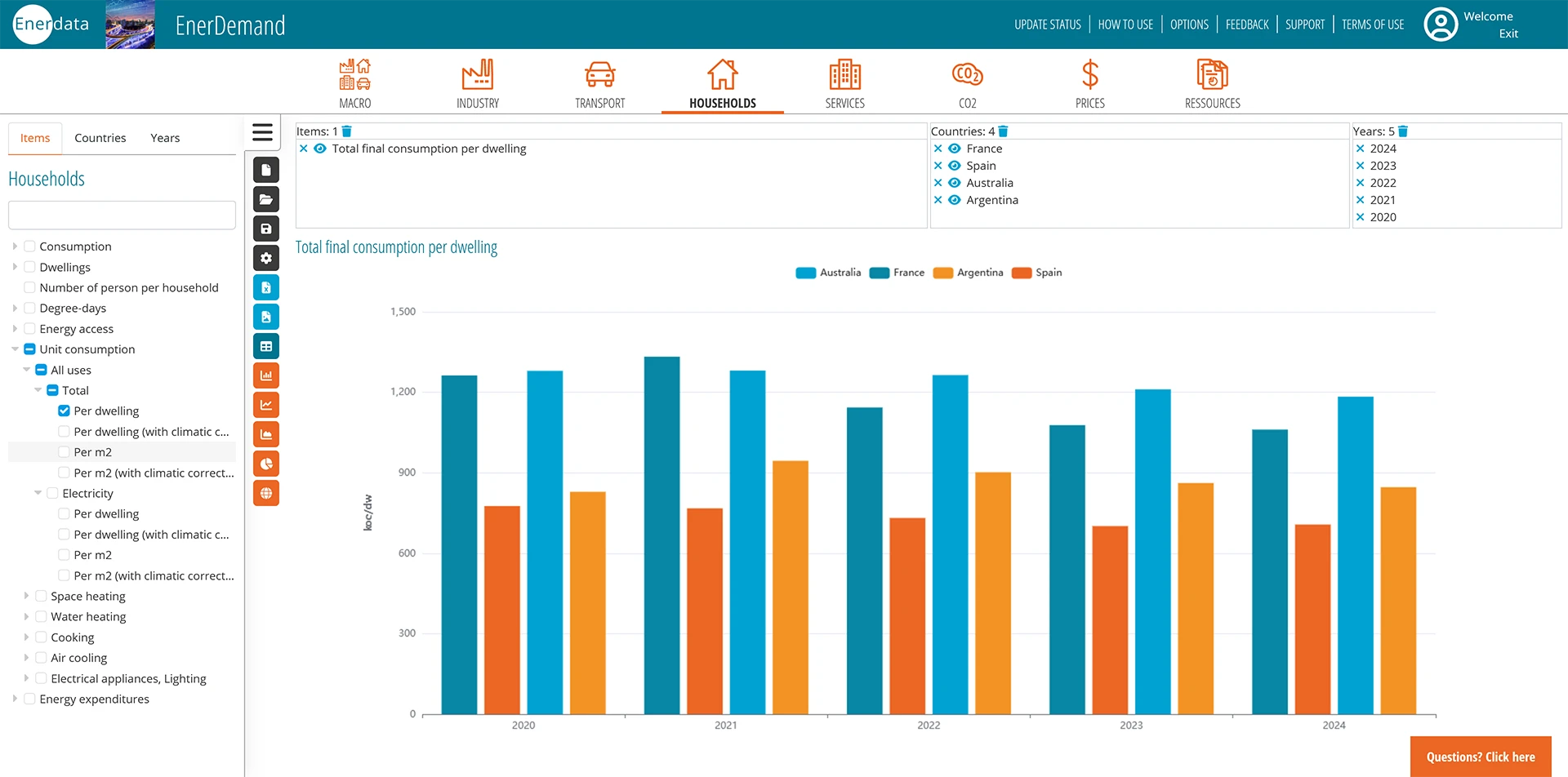
Households: Total consumption of space heating
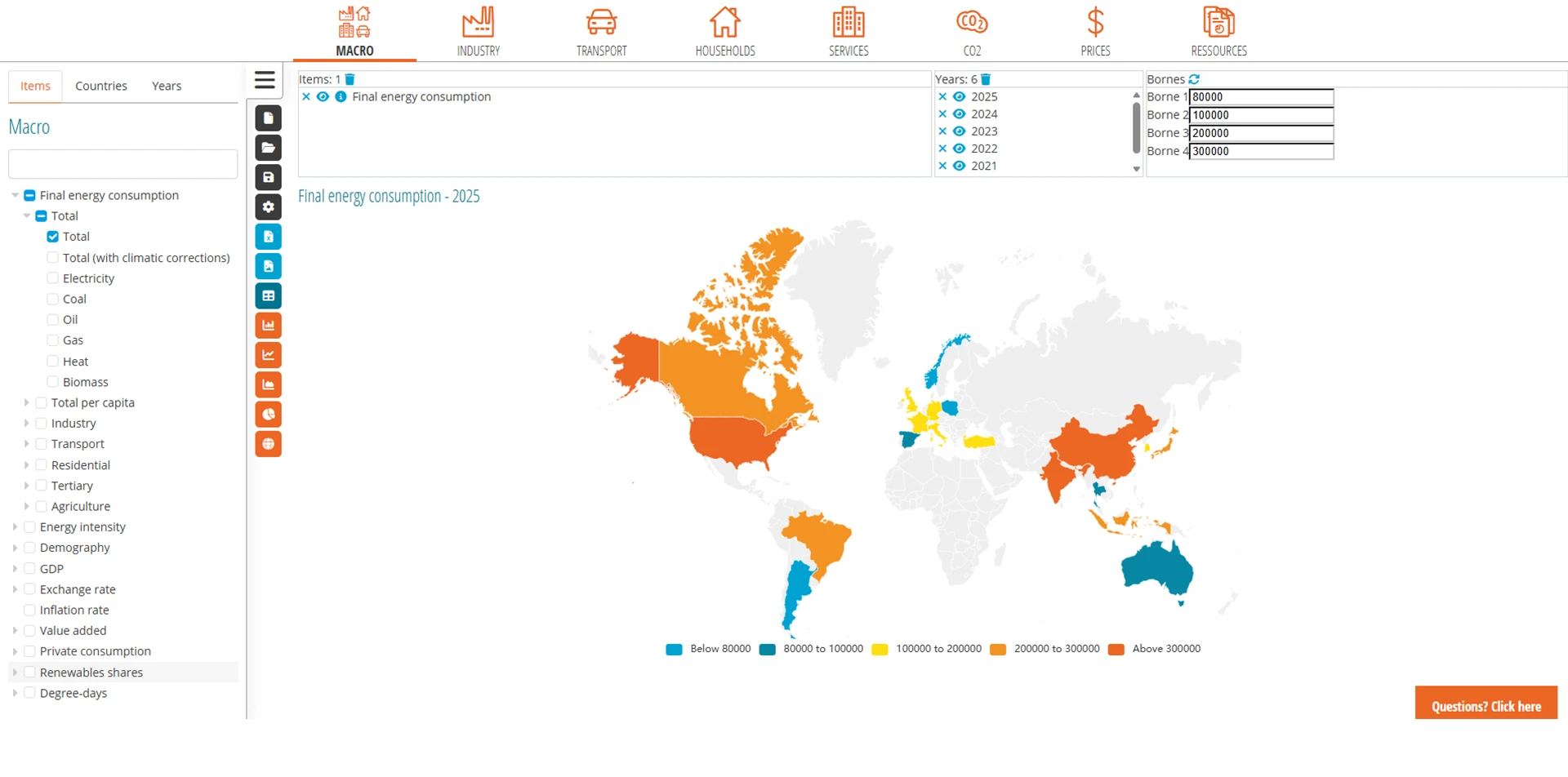
Final consumption in the world
EnerDemand residential energy consumption
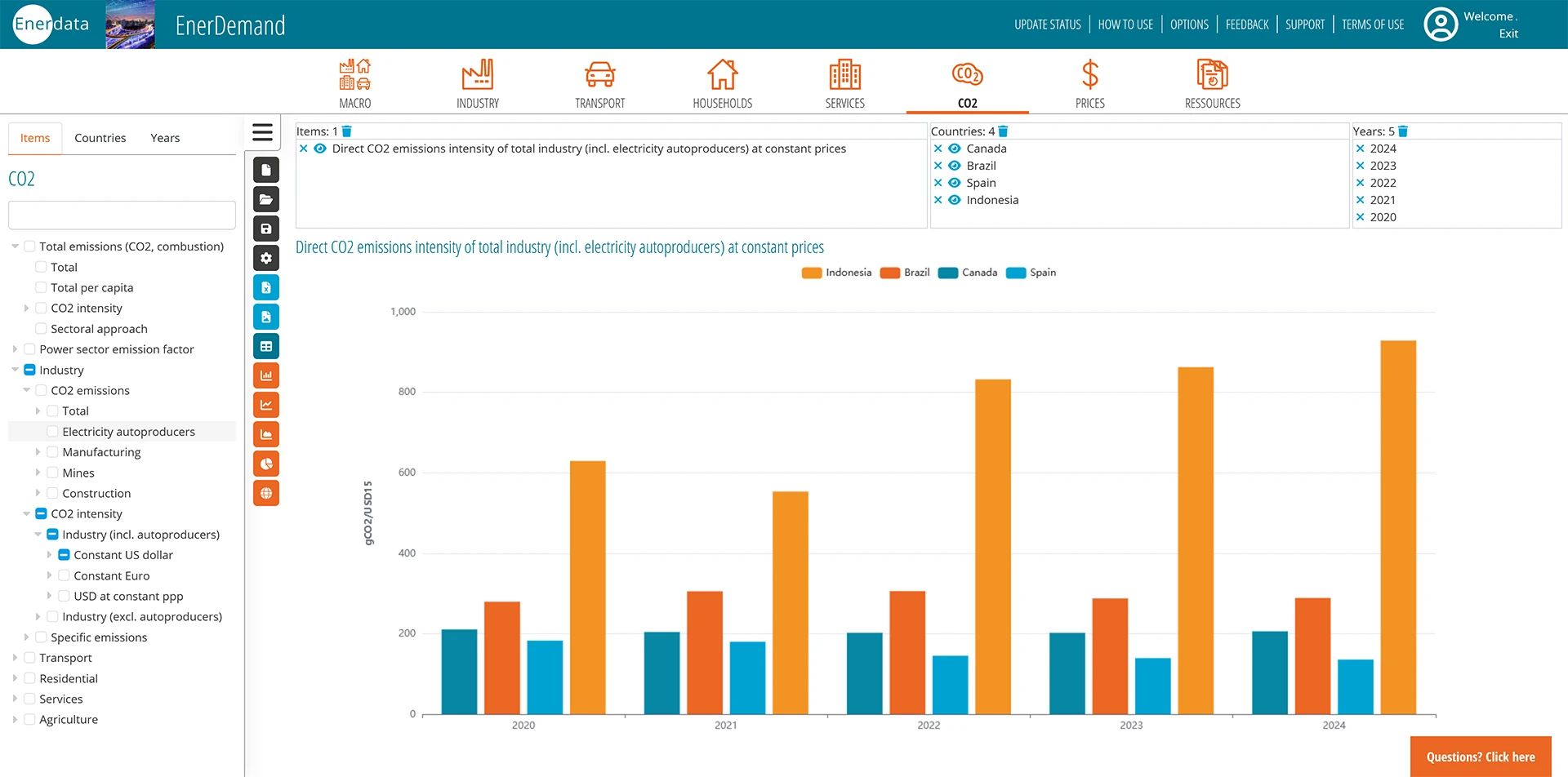
Direct CO2 emissions intensity in industry
Branches
- Chemical industry
- Primary metals
- Steel
- Non-ferrous
- Non-metallic minerals
- Cement*
- Glass*
- Paper & Printing
- Food & beverages
- Textile
- Machinery & Fabricated metals
- Transport equipment
- Miscellaneous industries
- Wood
- Mining
- Construction
Technical & Economic Data
- Energy consumption by branch
- Production index by branch
- Value added by branch
- Physical production for intensive products
Energy Efficiency Indicators
- Energy efficiency index*
- Energy intensity by branch
- Energy intensity at adjusted structure*
- Specific consumption by intensive products (toe/ton)
- CO2 intensity by sector
- CO2 emissions (direct & indirect)
- CO2 emissions from processes (IPPU)**
- Specific emissions by intensive products**
End-uses
- Space heating
- Water heating
- Cooking
- Electrical appliances
- Refrigerators*
- Freezers*
- Washing machines*
- Dish washing machines*
- TVs*
- Air conditioning
- Lighting
Technical & Economic Data
- Energy consumption
- Stock of dwellings
- New dwellings*
- Floor area of dwellings
- Type of heating*
- Stock of appliances*
- Equipment rates*
- Degree days
- Energy expenditures
Energy Efficiency Indicators
- Energy efficiency index*
- Specific consumption by dwelling, end-uses and equipment
- Specific emissions of CO2
- CO2 indicators
- Renovation and Energy Performance Certificates*
- Poverty and Sufficiency indicators*
Modes
- Road
- Cars
- Two-wheels
- Buses
- Light vehicles
- Trucks
- Rail
- Water
- Domestic aviation
Technical & Economic Data
- Energy consumption by fuel and by mode
- Stock of vehicles by fuel and type
- New registrations by fuel and vehicle types
- Traffic by mode
- Annual distance travelled by vehicle type
- Modal Split
- Network length**
- EV charging points**
- Vehicle density**
- Alternative fuel penetration (cars)**
Energy Efficiency Indicators
- Energy efficiency index*
- Specific consumption by mode and by vehicle
- Specific emissions of CO2 by mode and vehicle
Sectors
- Total
- Industry
- Transport
- Residential
- Service
- Agriculture
Technical & Economic Data
- Primary consumption*
- Final consumption
- Demography
- GDP, Value added
- Private consumption
Energy Efficiency Indicators
- Primary energy intensity*
- Final energy intensity
- Energy efficiency index*
- CO2 emissions (direct & indirect)
- CO2 intensity
- Renewables shares**
Branches*
- Hotels & Restaurants
- Health
- Education
- Administration
- Wholesale & retail trades
- Private offices
Technical & Economic Data
- Energy consumption
- Value added
- Floor area*
- Employment
Energy Efficiency Indicators
- Energy intensity
- Electric intensity
- Energy efficiency index*
- Specific consumption per employee, floor area*
- CO2 emissions
End-uses
- Space heating
- Water heating
- Cooking
- Air conditioning
- Lighting
Geographical coverage
The EU27:
- Austria
- Belgium
- Bulgaria
- Croatia
- Cyprus
- Czechia
- Denmark
- Estonia
- Finland
- France
- Germany
- Greece
- Hungary
- Ireland
- Italy
- Latvia
- Lithuania
- Luxembourg
- Malta
- Netherlands
- Poland
- Portugal
- Romania
- Slovakia
- Slovenia
- Spain
- Sweden
13 other European countries:
- Albania
- Bosnia and Herzegovina
- Georgia
- Kosovo
- Moldova
- Montenegro
- North Macedonia
- Norway
- Serbia
- Ukraine
- Switzerland
- Türkiye
- United Kingdom
Global Database
- Argentina
- Australia
- Brazil
- Canada
- China
- India
- Indonesia
- Japan
- South Korea
- Thailand
- United States
- European Union
ODEX Methodology**
A top-down approach to capture energy savings in Europe
- ODEX by sector combines unit consumption indicators by sub-sector (or end-use or mode of transport) into one index for the sector, by weighting each sub-sector index by its share in the sector’s energy consumption
- Unit consumption index by sub-sector can use different physical units to be as close as possible to energy efficiency evaluation: toe/m2, kWh/appliance, toe/ton, litre/100 km, etc.
- ODEX is presently calculated on the basis of 26 sub-sectors (8 modes of transport, 11 end-uses and equipment for households, 6 branches in services and 14 branches in industry)
ODEX can also be expressed in terms of volume of energy savings.
**only available for European countries