The G7, which includes Germany, Britain, France, Italy, Japan, Canada and the US, has agreed to phase out coal-fired generation but did not set a specific date or year for doing so. This pledge is the first commitment made by the G7, as a group, to quit coal-fired power. The Japanese Minister of Economy, Trade and Industry also announced that Japan would reduce its reliance on coal-fired generation as much as possible, with plans to phase out inefficient coal power plants towards 2030. The G7 also agreed to decarbonise their power sectors by 2035, and to stop public financing for unabated fossil fuel projects abroad by the end of 2022, except in some circumstances. In addition, G7 countries pledged to end subsidies for heavily-polluting fuels by 2025.
In November 2021, the COP26 has ended with a compromise agreement on climate, which recognises the need to cut global CO2 emissions by 45% by 2030 compared to the 2010 level and to net-zero by 2050 to limit global warning to 1.5°C. The so-called Glasgow Climate Pact calls upon parties to "accelerate the development, deployment and dissemination of technologies, and the adoption of policies, to transition towards low-emission energy systems, including by rapidly scaling up the deployment of clean power generation and energy efficiency measures, including accelerating efforts towards the phase down of unabated coal power and phase-out of inefficient fossil fuel subsidies".
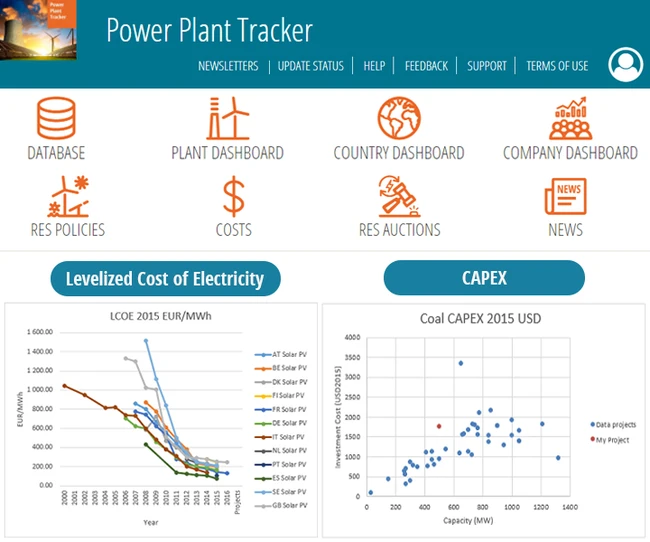
Searching for proven generation costs?
Then CAPEX & LCOE is the database you need. The module provides exclusive insights on both Capital Expenditure and Levelised Cost of Electricity.
Make informed decisions in terms of which technologies to invest in and where. In just a few clicks, access unique, premium data on both thermal and renewable power generation costs by technology and by country. Put our detailed, reliable information to use and benchmark your project.