The European Commission (EC) has released its European Union (EU) energy security strategy to strengthen security of supply in reaction to the current geopolitical environment and the EU´s import dependence: It advocates a new European Energy Security Strategy. Diversifying external energy supplies, upgrading energy infrastructure, completing the EU internal energy market and saving energy are among its main points.
The EU's energy import dependence has raised since the mid-1990s. Today, the EU spends more than €1bn every day on importing energy, representing about 20% of the EU's total import bill. In 2012, 53% of the EU's energy consumption was linked to imports. EU imported 88% of crude oil consumed, 66% of natural gas, 42% of solid fuels and less than 4% of renewables (biomass), 95% of uranium.
Based on latest figures from 2013, a third of crude oil imports came from Russia, 11% from Norway and 8% from Saudi Arabia. The EU paid about €300bn for the crude oil imports.
To address the medium- and long-term security of supply challenges, the Commission proposes actions in several key areas:
- Completing the internal energy market and building missing infrastructure. The Commission has identified 33 infrastructure projects which are critical for the EU's energy security. In addition the EC proposes to extend to 15% the target interconnection capacity / installed electricity capacity by 2030 (Member States have already committed to ensure interconnectivity of 10% by 2020.)
- Diversifying supplier countries and routes. In 2013, 39% of EU gas imports by volume came from Russia, 33% from Norway and 22% from North Africa (Algeria, Libya). The EU will seek ties to new partner countries and supply routes, e.g. in the Caspian Basin region by further expanding the Southern Gas Corridor; by developing the Mediterranean Gas Hub and by increasing LNG supplies.
- Strengthening emergency and solidarity mechanisms and protecting critical infrastructure.
- Increasing indigenous energy production: This includes further deployment of renewables, and sustainable production of fossil fuels.
- Improving coordination of national energy policies and speaking with one voice in external energy policy.
- Increasing energy efficiency.
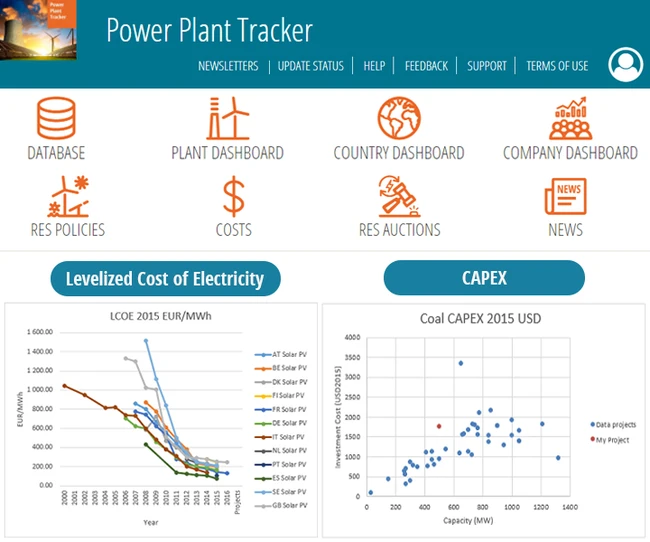
Searching for proven generation costs?
Then CAPEX & LCOE is the database you need. The module provides exclusive insights on both Capital Expenditure and Levelised Cost of Electricity.
Make informed decisions in terms of which technologies to invest in and where. In just a few clicks, access unique, premium data on both thermal and renewable power generation costs by technology and by country. Put our detailed, reliable information to use and benchmark your project.