The Asian Development Bank (ADB) has agreed to provide US$500m in financing for rooftop solar systems in India, to help the Indian government expand energy access using renewable energy and reduce its greenhouse gases (GHG) emissions. The financing comprises US$330m from ADB and US$170m from the multi-donor Clean Technology Fund administered by ADB. This funding should mean that 11 million fewer tons of GHG are emitted over the typical 25-year lifetime of solar rooftop systems.
India aims to increase its solar rooftop capacity to 40 GW by 2022, as part of the Jawaharlal Nehru National Solar Mission (JNNSM) to increase its overall solar energy capacity to 100 GW by 2022. At the end of July 2016, 7.8 GW of solar power capacity had been installed in the country. Under the 2015 Paris climate agreement, India aims to lower the emissions intensity of its economy by 33% from 2005 levels and to increase the share of non-fossil-fuel-based power generation capacity to 40% of installed power capacity by 2030.
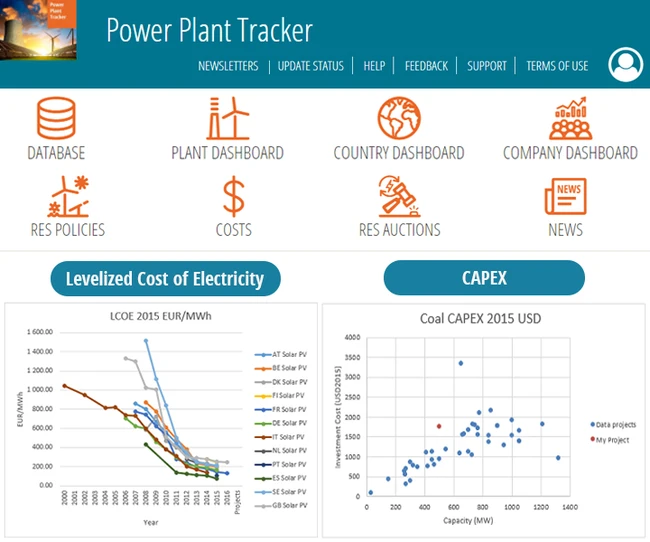
Searching for proven generation costs?
Then CAPEX & LCOE is the database you need. The module provides exclusive insights on both Capital Expenditure and Levelised Cost of Electricity.
Make informed decisions in terms of which technologies to invest in and where. In just a few clicks, access unique, premium data on both thermal and renewable power generation costs by technology and by country. Put our detailed, reliable information to use and benchmark your project.