Danish companies European Energy, Copenhagen Infrastructure Partners (CIP) and Everfuel have been awarded a combined EUR1.3bn in subsidies after winning a German hydrogen auction conducted under the European Hydrogen Bank (Renewables Now, 01/06/2026).
The largest allocation was granted to Copenhagen Infrastructure Partners (CIP), which secured EUR777m for a 240 MW hydrogen project located in Esbjerg (Denmark). This support corresponds to around EUR1.70/kg of hydrogen produced. The project is part of the wider HØST Esbjerg initiative, which is expected to ultimately include 1 GW of electrolysis capacity and produce up to 120,000 t/year of green hydrogen.
For its part, European Energy secured EUR228m in funding for an additional 150 MW electrolyser at its Kasso site (Denmark). The subsidy amounts to approximately EUR 1.07/kg of hydrogen. The company plans to combine the project with its existing e-methanol activities, which reached full commercial operation in 2025. According to management, the award further underlines the strategic importance of expanding hydrogen infrastructure links between Denmark and Germany.
At the same time, Everfuel was awarded EUR245m to finance the initial 200 MW phase of its larger Project Frigg in Vejen (Denmark). The support level, at approximately EUR 0.98/kg was the lowest among the successful projects, illustrating the growing competitiveness of large-scale hydrogen developments across Europe. Project Frigg could eventually reach up to 2 GW of electrolyser capacity and is being designed to supply industrial customers in Germany through the future hydrogen pipeline network.
Together, the three selected projects are expected to generate 78,000 t/year of renewable hydrogen, which will be transported via a planned Danish-German hydrogen interconnector. The 10-year grant agreements are scheduled to be finalised by the end of October 2026, while deliveries of renewable hydrogen are expected to begin in 2031.
More recently, the European Commission approved the EUR 1.3 billion German State aid scheme (KEI, 22/05/2026). The programme is intended to support the deployment of up to 1 GW of installed electrolyser capacity and the production of up to 10 Mt of renewable hydrogen, helping to avoid as much as 55 MtCO₂ in emissions.
More specifically, the scheme targets companies planning to build new electrolysers connected to the Danish Hydrogen Backbone 1 pipeline, a Project of Common Interest, and supplying the German Hydrogen Core Network. Successful applicants will also receive support for the development of the cross-border infrastructure required to implement their respective projects.
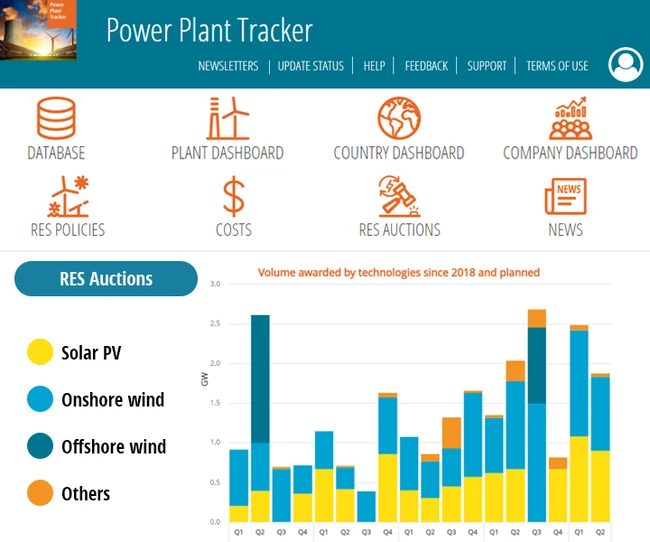
Do you want to become an expert on renewable energies auctions?
Discover our very detailed and regularly updated RES auctions database with worldwide coverage and a technical focus backed by academic research.
With our renewable energies auctions service you will be able to monitor auctions at a global level. Its (expanding) scope notably includes all major G20 countries and offers an especially fine tracking on Europe and South America.