See also
EnerFuture 2025: Ten Years After the Paris Agreement – What’s Done, What’s Due?
A decade on from the COP21 in Paris, which yielded the historic international agreement, the world finds itself at a pivotal moment.
This publication provides an assessment of the last decade, analysing the progress made since 2015 and offering a robust look ahead to 2050, powered by our globally recognised POLES-Enerdata model.
Assessing progress & forecasting targets
Ten years ago, the world united in a landmark deal. The Paris Agreement was forged with a clear and vital mission: to hold the global temperature rise well below 2°C. It sparked unprecedented global ambition and mobilised climate action.
A decade on from this pivotal commitment, where do we stand?
- Is the <2 °C goal still scientifically and politically achievable?
- What tangible progress has been made since the Agreement?
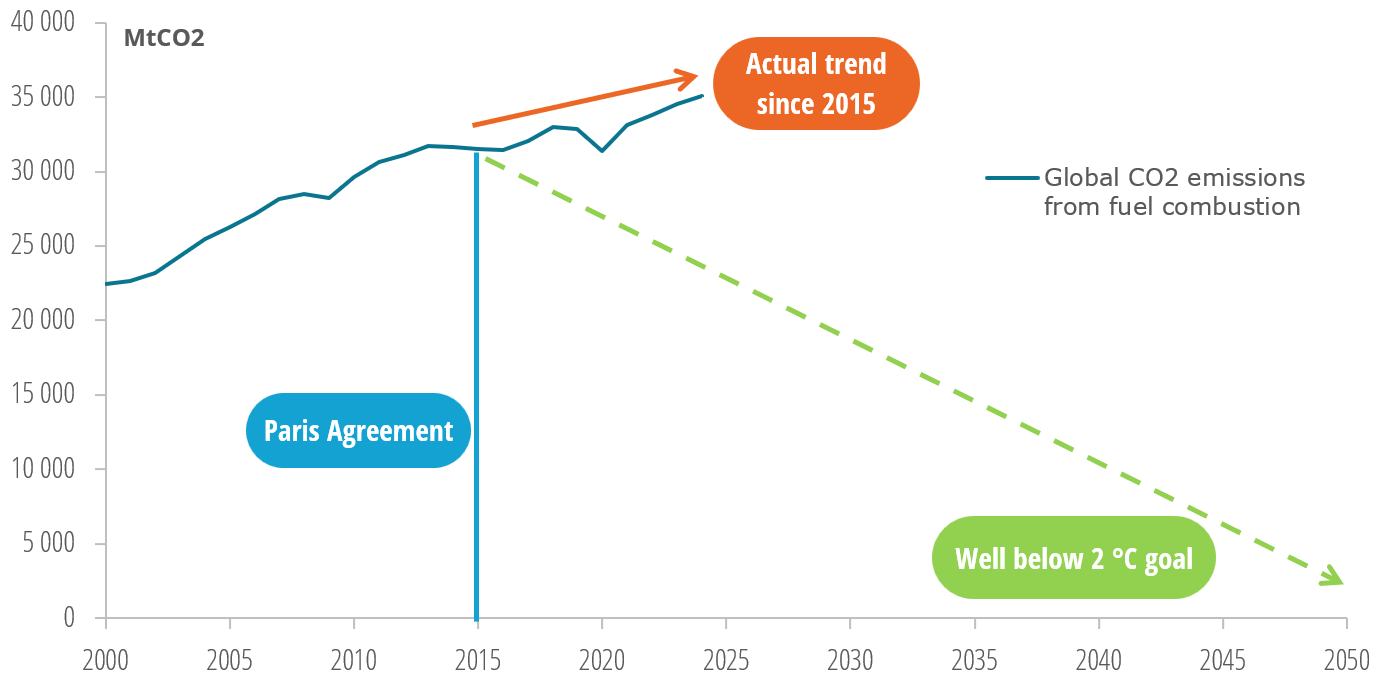
- Given current NDC, where are our emissions truly heading by the mid-century mark?
- How has the evolving geopolitical landscape altered the future of international climate cooperation?
10 years after the Paris Agreement, where do we stand?
Source: Enerdata, EnerFuture
Our insights are driven by EnerFuture, our comprehensive database providing energy forecasts up to 2050 based on the recognised POLES model.
During this webinar, our experts have covered:
- The unachievable target: they assessed past and current emission trajectories and projections up to 2050 using the EnerGreen scenario. They demonstrated why maintaining a < 2°C pathway now looks increasingly unrealistic under existing frameworks, detailing the required, concrete implication for technology development, energy demand reduction, and efficiency implementation.
- Still a significant contribution: they dived into the EnerFuture Scenario Pre-COP21 to measure the impact the Agreement has already had. By contrasting the present reality with the EnerBase forecasts at the time, they showed how the Agreement successfully initiated NDCs, raised global awareness and cemented a shared goal of “well below 2 °C”.
- Moving Forward: using energy modelling, they forecasted what must be expected for the next quarter-century, and measure the impact of major barriers, specifically in the current geopolitical context, including shifts in the USA policy and the decline in climate funding.