Venezuela’s National Assembly has approved a partial reform of the Organic Law on Hydrocarbons, overhauling the country’s oil sector to give foreign companies greater control over their operations and lower royalty rates (up to 30%) (Venezuela’s National Assembly statement, 30/01/2026).
The new law formalises an oil production-sharing model and allows private producers to operate projects under new oil contracts or in joint ventures, even as minority stakeholders, allowing them to commercialize production and manage cash flows independently of state-owned PDVSA.
Recent amendments to the law reduced income taxes for energy projects and removed several additional levies. However, a new hydrocarbon tax has been introduced (up to 15% on gross income, but yet to be regulated through separate legislation), raising questions about whether the government intends to significantly reduce its take, which remains among the highest in Latin America (Reuters, 30/01/2026).
In addition, at the end of January 2026, the United States eased certain sanctions on Venezuela’s oil industry, facilitating US companies’ ability to sell Venezuelan crude (U.S. Treasury Department statement, 29/01/2026). The US Treasury’s Office of Foreign Assets Control now allows US companies to buy, sell, transport, store, and refine Venezuelan crude, although existing sanctions on production remain in place. This new authorisation also allows additional US companies to participate in Venezuelan oil trade, while explicitly excluding firms and individuals from countries such as China, Iran, North Korea, Cuba, and Russia.
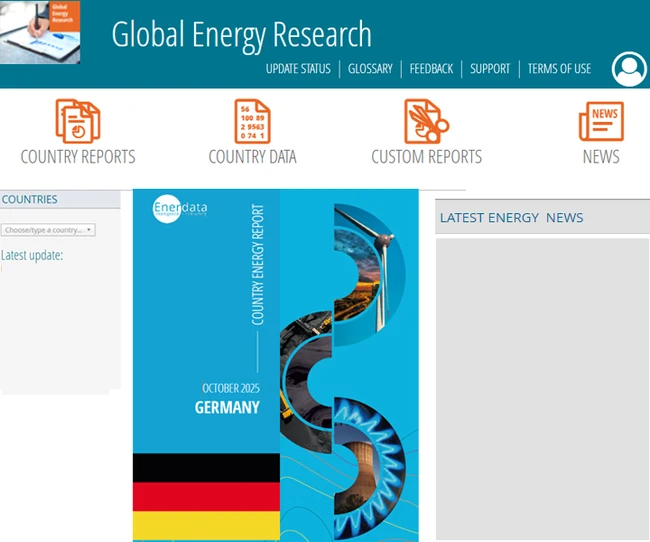
Interested in Global Energy Research?
Enerdata's premium online information service provides up-to-date market reports on 110+ countries. The reports include valuable market data and analysis as well as a daily newsfeed, curated by our energy analysts, on the oil, gas, coal and power markets.
This user-friendly tool gives you the essentials about the domestic markets of your concern, including market structure, organisation, actors, projects and business perspectives.