The United States administration has confirmed that it will start its formal withdrawal from the Paris Climate Agreement aimed at cutting global greenhouse gas (GHG) emissions. The President had announced the upcoming withdrawal in early June 2016 and the Department of State had notified its decision to the United Nations in August 2017, considering that the Agreement would cost nearly US$3,000bn in reduced output, over 6 million industrial jobs and over 3 million manufacturing jobs.
The Paris agreement was signed by nearly 200 countries in December 2015, in an attempt to cut global GHG emissions and to keep global temperature increases "well below" 2°C. The United States, which committed in November 2014 to reduce net GHG emissions by 26%-28% below 2005 levels by 2025, formally ratified the agreement in September 2016. The Paris agreement entered into force on 4 November 2016, i.e. 30 days after 55 countries, representing 55% of global GHG emissions, deposited their instruments of ratification, acceptance or accession with the Secretary-General.
Under the terms of the Paris Agreements, countries having ratified the deal are not allowed to withdraw within 4 years following the date of the Agreement coming into force: the United States should then withdraw as of 4 November 2020, i.e. after the 2020 presidential election. Should a new president be elected, the United States could rejoin the Agreement but would have to present new climate commitments to the United Nations.
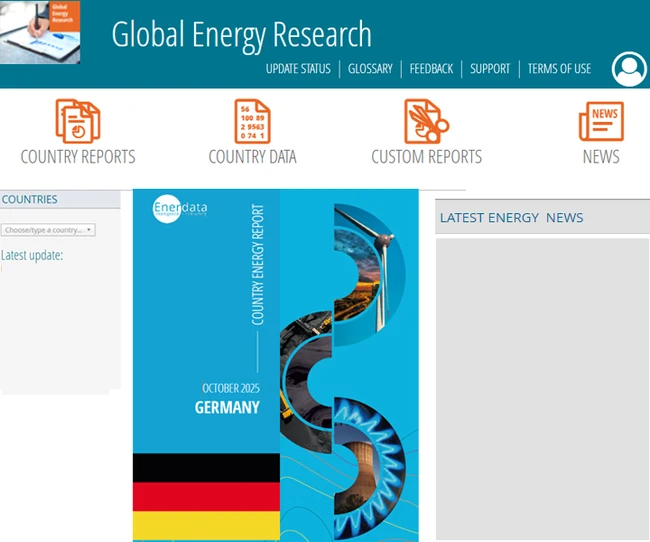
Interested in Global Energy Research?
Enerdata's premium online information service provides up-to-date market reports on 110+ countries. The reports include valuable market data and analysis as well as a daily newsfeed, curated by our energy analysts, on the oil, gas, coal and power markets.
This user-friendly tool gives you the essentials about the domestic markets of your concern, including market structure, organisation, actors, projects and business perspectives.