The District Court for the Eastern District of California (United States) has ruled that linking the carbon markets of California (US) and Quebec (Canada) is constitutional and doesn't conflict with the federal governments foreign policy. This decision could encourage new linkages between US states and Canadian provincial markets.
In October 2019, the US Department of Justice decided to sue the state of California over its cap-and-trade scheme, considering that linking it to that of the Canadian province of Quebec was unconstitutional since only the federal government has exclusive responsibility over foreign policy matters. Established in 2013, California's cap-and-trade programme covers the power sector, refineries, large industrial greenhouse gas (GHG) emitters and energy suppliers (supplying gas, propane, diesel and gasoline burned in residential, commercial and industrial sites). Emission permits can be traded on an open market. In 2013, California reached an agreement with Quebec to formally link their cap-and-trade systems as of 2014 (first joint sale held in November 2014). In 2017, they announced the upcoming harmonisation and integration of their cap-and-trade and GHG reporting programmes, with the aim of making emission allowances tradable between the two markets. Ontario joined the cap-and-trade system, before withdrawing in 2018.
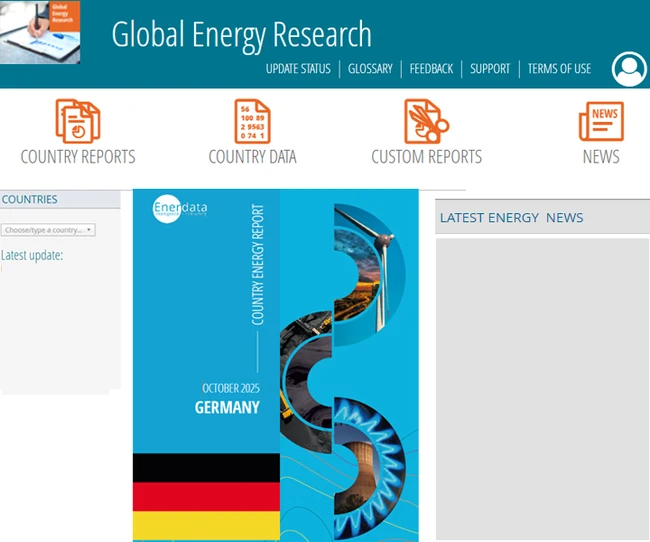
Interested in Global Energy Research?
Enerdata's premium online information service provides up-to-date market reports on 110+ countries. The reports include valuable market data and analysis as well as a daily newsfeed, curated by our energy analysts, on the oil, gas, coal and power markets.
This user-friendly tool gives you the essentials about the domestic markets of your concern, including market structure, organisation, actors, projects and business perspectives.