The UK Government has announced that the country has halved its greenhouse gas (GHG) emissions between 1990 and 2022, making it the first major economy to achieve that goal while also experiencing a nearly 80% growth in the economy.
The GHG emissions reductions are largely due to cutting emissions from power generation through a shift away from coal towards renewable energy, increasing the renewables electricity generation from 7% in 2010 to nearly 50% in 2023. Indeed, GHG emissions from electricity supply fell by 73% between 1990 and 2022 to 14% of total emissions in 2022, while those from industry fell by 63% to 14%, those from fuel supply by 60% to 8% and those from waste by 74% to 5%. GHG emissions from buildings and product uses decreased by 24% to 20% of total emissions, while those from transports and agriculture dipped by 12% each to 28% and 12%, respectively. Domestic transport emissions were significantly impacted by the COVID-19 pandemic and restrictions, falling by 19% in 2020 before rising subsequently (+2% in 2022), and emissions from UK-based international aviation bunkers doubled between 2021 and 2022.
In its updated NDC (2022), the UK aims to reduce its GHG emissions by 68% by 2030 from 1990 level, compared to 53% in the previous NDC. In 2021, the country set into law a new reduction target of 78% in 2035.
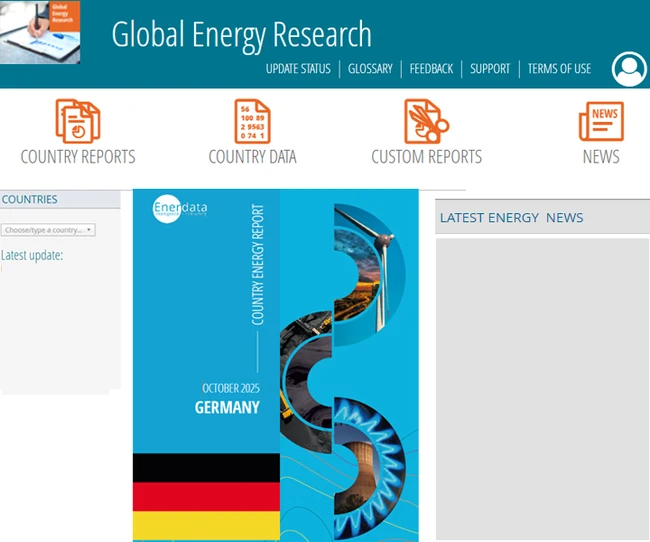
Interested in Global Energy Research?
Enerdata's premium online information service provides up-to-date market reports on 110+ countries. The reports include valuable market data and analysis as well as a daily newsfeed, curated by our energy analysts, on the oil, gas, coal and power markets.
This user-friendly tool gives you the essentials about the domestic markets of your concern, including market structure, organisation, actors, projects and business perspectives.