The British Treasury has presented a plan to reduce CO2 emissions from the most polluting sectors of the United Kingdom (UK) economy, including industry, transports and heating. As part of the 2020 budget, the Treasury intends to spend £1bn (€1.1bn) to foster transport decarbonisation (half of which to support the rollout of super-fast electric vehicle charging network and the other half to extend Plug-in Grant schemes for ultra-low emission vehicles to 2023), £800m (€899m) to develop two carbon capture projects, £270m (€304m) to create a green heat network fund and £100m (€112m) to enhance low-carbon heating in the residential sector.
In addition, the government will introduce a Green Gas Levy (to support biomethane production for the gas grid) and the Climate Change Levy. Fuel duty will be frozen for the 10th year in a row and the tax relief on the so-called 'red diesel' (cheaper than the standard diesel rate) for businesses will be scrapped by 2023.
In June 2019, the United Kingdom adopted a law requiring to bring all greenhouse gas (GHG) emissions to net zero by 2050. This means that the UK will continue to cut its GHG emissions and that residual emissions will have to be balanced by schemes to offset an equivalent amount of GHG, such as planting trees or using technology like carbon capture and storage (CCS).
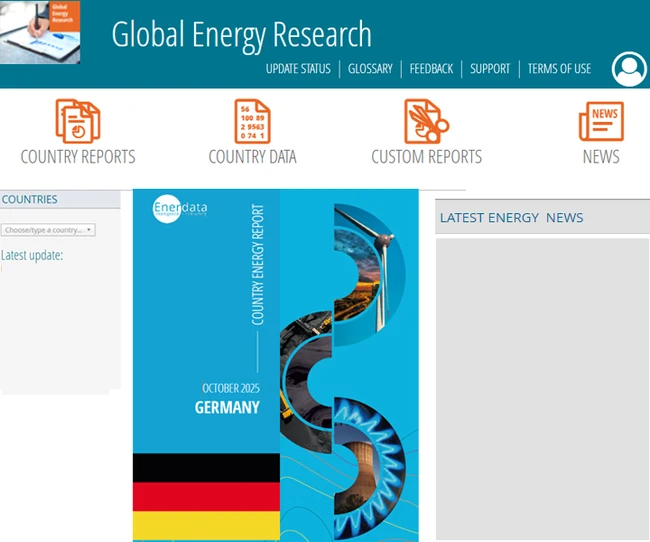
Interested in Global Energy Research?
Enerdata's premium online information service provides up-to-date market reports on 110+ countries. The reports include valuable market data and analysis as well as a daily newsfeed, curated by our energy analysts, on the oil, gas, coal and power markets.
This user-friendly tool gives you the essentials about the domestic markets of your concern, including market structure, organisation, actors, projects and business perspectives.