The Oil and Gas Authority (OGA) of the United Kingdom plans to modify its main goal of maximising economic recovery (MER) and to include a requirement for industry to help the UK government achieve the target of net-zero greenhouse gas (GHG) emissions by 2050. Low carbon obligations on operators would comprise cutting flaring and GHG emissions as much as possible, fully assessing low carbon development options like platform electrification, and requiring negotiations in “good faith” on carbon capture and storage (CCS). Failure to comply with the new obligations would be subject to sanctions, including licenses or operatorship being withdrawn. A 12-week consultation on OGA’s proposal opened on 6 May and runs until 29 July 2020.
In June 2019, the United Kingdom adopted a law obliging to bring all GHG emissions to net-zero by 2050. This means that the UK will continue to cut its GHG emissions and that residual emissions will have to be balanced by schemes to offset an equivalent amount of GHG, such as planting trees or using technology like CCS. According to provisional figures from the British Department for Business, Energy and Industrial Strategy (BEIS), total GHG emissions in the United Kingdom declined by 3.6% in 2019 to 435 MtCO2eq., i.e. 45% below their 1990 level. Net emissions of CO2, which accounted for 81% of total UK GHG emissions, decreased by 3.9% in 2019 to 351.5 MtCO2 (41% below their 1990 level).
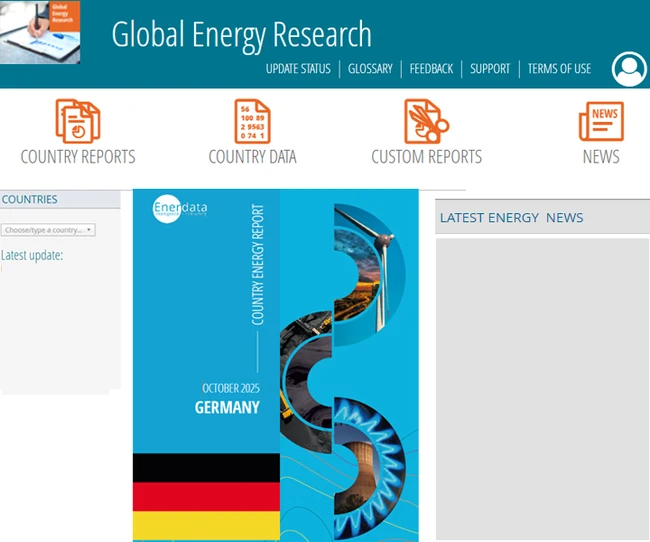
Interested in Global Energy Research?
Enerdata's premium online information service provides up-to-date market reports on 110+ countries. The reports include valuable market data and analysis as well as a daily newsfeed, curated by our energy analysts, on the oil, gas, coal and power markets.
This user-friendly tool gives you the essentials about the domestic markets of your concern, including market structure, organisation, actors, projects and business perspectives.