Two Japanese power utilities have decided to decommission nuclear reactors, due to high investments required to upgrade them to safety standards enacted after the Fukushima disaster in March 2011. Kansai Electric (KEPCO) has decided to decommission the Mihama-1 and 2 reactors, rated 320 MW and 470 MW, respectively, while Japan Atomic Power has decided to decommission its 340 MW Tsuruga-1 reactor. Two additional reactors, operated by Kyushu Electric and Chugoku Electric, could also be decommissioned (announcements expected in March 2015); these reactors, as Mihama-1-2 and Tsuruga-1, are 39 to 44 year old and have a relatively low capacity (less than 560 MW).
All 48 nuclear reactors were taken offline in March 2011 - only two reactors were briefly restarted - and nearly 2/3 of the reactors may never return to operation due to high upgrade costs, seismic risks (change in regulation on nuclear plants located on active faults) or local opposition. So far, only four reactors have cleared initial safety checks and could be restarted, namely Sendai (Kyushu Electric, two reactors) and Takahama-3-4 (Kansai Electric). Companies have to apply by July 2015 for an one-time extension of the operational lifetime, that has been limited to 40 years after the Fukushima accident. Other decommissioning could then follow.
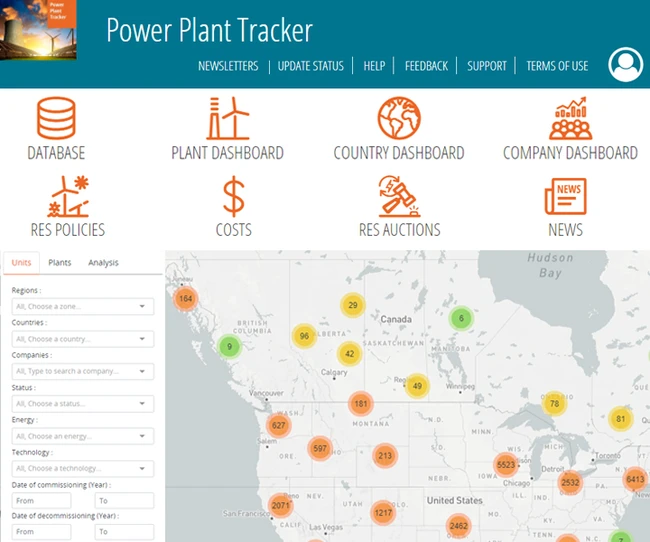
Interested in Power Plants?
Enerdata has developed a market research service to screen, monitor and analyse the development of power generation assets.
Power Plant Tracker offers an interactive database and a powerful search engine covering power plants worldwide – including both installed and planned capacities for renewables and fossil fuels.