The Swiss Federal Council has decided to implement a revised CO2 Ordinance with retroactive effect to 1 January 2025. The bill sets the reduction targets for greenhouse gas emissions in various sectors by 2030, aiming to halve the country’s GHG emissions by 2050 compared to 1990 levels.
The ordinance also provides new funding instruments for companies (financial support to significantly reduce their GHG, support for biomethane production (to be fed into the gas grid or used as fuel), and the exemption from the CO2 levy for companies that commit to reducing their emissions at an average minimum value of 2.25% per year (previously established at 2.5% per year). Companies participating in Switzerland's Emissions Trading System (ETS) can apply for financial support for measures that enable them to significantly reduce their GHG emissions.
The act also provides measures and guidelines to promote reduce emissions in the transport and aviation sectors, like a 12% domestic offset for CO2 emissions from transportation though climate protection projects, a CO2 target value in grams per km for heavy commercial vehicles, the implementation of obligation to blend renewable and low-emission aviation fuels in 2026, and the financing of measures to reduce GHG emissions from aviation. Within the construction sector a CHF120/tCO2 (€127/tCO2) levy will continue to be collected.
Some of the measures will come into force retroactively as of 1 January 2025 to ensure that the existing climate policy instruments are continued without gaps.
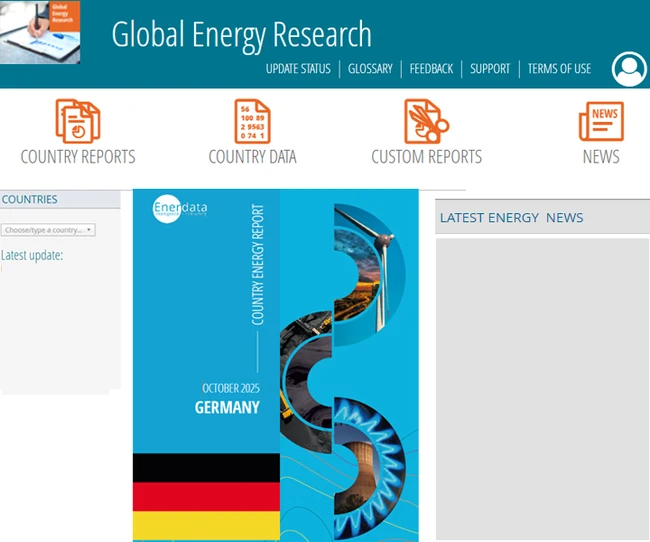
Interested in Global Energy Research?
Enerdata's premium online information service provides up-to-date market reports on 110+ countries. The reports include valuable market data and analysis as well as a daily newsfeed, curated by our energy analysts, on the oil, gas, coal and power markets.
This user-friendly tool gives you the essentials about the domestic markets of your concern, including market structure, organisation, actors, projects and business perspectives.