Sweden has agreed to abolish the nuclear capacity tax after discussions with nuclear plants operators, paving the way for large investments to extend the lifetime for nuclear reactors.
The reactors of Forsmark and Ringhals have gone through a comprehensive modernisation programme allowing operation until the mid-2040s. Savings from the nuclear tax removal will enable operators to meet stricter safety requirements after 2020 through the installation of independent core cooling.
A tax on nuclear power generation was introduced in 1984 and progressively raised from öre 0.2/kWh to öre 2.7/kWh in 2000, when it was replaced by a tax on capacity; it progressively rose to öre 7/kWh (€75c/kWh). In addition, a specific tax on hydro production was introduced in 1983, initially at öre 1.5/kWh. In 1997 it was replaced by a real-estate tax currently at about öre 8.5/kWh (€91c/kWh).
The agreement also allows for the construction of up to ten new nuclear reactors at existing sites, to replace reactors that will retire.
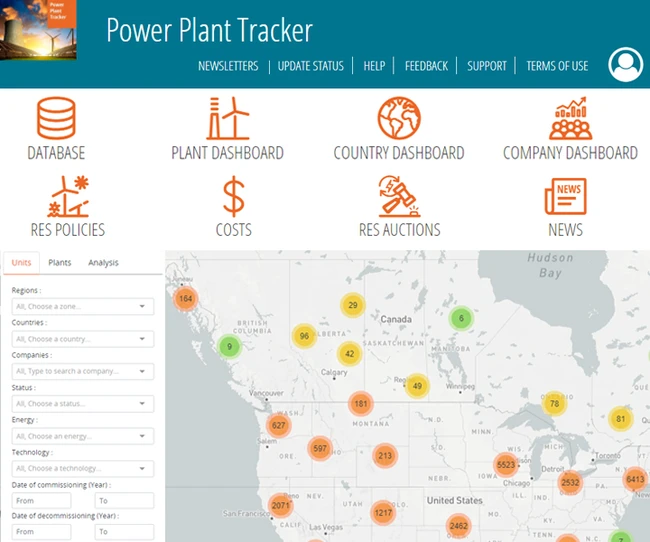
Interested in Power Plants?
Enerdata has developed a market research service to screen, monitor and analyse the development of power generation assets.
Power Plant Tracker offers an interactive database and a powerful search engine covering power plants worldwide – including both installed and planned capacities for renewables and fossil fuels.