The Supreme Court of Canada has ruled the federal carbon pricing law is constitutional. The carbon pricing scheme was challenged by the provinces of Alberta, Saskatchewan and Ontario; the courts of appeal for Saskatchewan and Ontario found the Act constitutional, while the Alberta Court of Appeal found it unconstitutional.
In 2018, the federal government announced that it would impose a CAD20/t (US$16/t) "backstop" carbon tax on fuels in the provinces and territories that had no adequate carbon pricing plans and refused to adopt the country-wide CO2 pricing system. The law was adopted in 2018. The price floor was set at CAD20/t (US$16/t) in 2020 and should increase linearly to reach CAD50/t (US$40/t) in 2022. In December 2020, the authorities decided to increase the carbon tax by CAD15/t (US$12/t) every year starting in 2023: the carbon tax should thus rise from CAD50 (US$40/t) in 2022 to CAD170 (US$135/t) in 2030. In turn, Canadian households will be granted carbon tax rebates, which will increase until 2030.
In November 2020, Canada unveiled a new plan to reach net-zero emissions by 2050. The new regulation would force the federal government to create interim emissions reduction targets every five years until 2050. In addition, the bill will create an outside advisory board that would provide advice to the government on settings targets and the best sectoral strategies for achieving net-zero. The text is yet to be approved by the parliament. The fastest-growing source of emissions in Canada is the exploitation of oil sands.
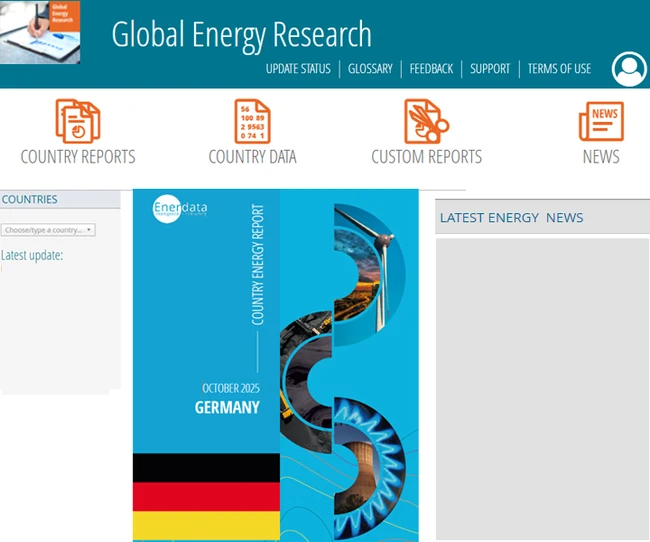
Interested in Global Energy Research?
Enerdata's premium online information service provides up-to-date market reports on 110+ countries. The reports include valuable market data and analysis as well as a daily newsfeed, curated by our energy analysts, on the oil, gas, coal and power markets.
This user-friendly tool gives you the essentials about the domestic markets of your concern, including market structure, organisation, actors, projects and business perspectives.