South Korea has updated its long-term power supply plan, in an attempt to reduce CO2 emissions, and plans to raise the number of nuclear reactors operational from 23 in 2014 to 36 by 2029. Nuclear reactor operator Korea Hydro and Nuclear Power (KHNP) having already announced plans to develop 11 new units, the Ministry of Energy has included two new nuclear reactors to its projects. The two new projects should add a combined capacity of 3 GW and should be commissioned in 2028 and 2029. Four coal-fired power projects with a combined capacity of 3,740 MW, which had not received approval due to fuel and transmission issues, have been cancelled. Under the new plan, coal should account for 32% of the power mix during peak demand in 2029 (from 35% in the previous plan to 2027), followed by nuclear with 28.5% (27% previously), LNG (25%), CHP (5.8%), renewables (4.6%) and oil and pumped-storage (4.2%). By 2029, electricity consumption is forecast to rise by 2.2%/year to 657 TWh (peak demand of 112 GW in 2029).
By late June 2015, the energy ministry will issue its decision on a new lifetime extension for the 587 MW Kori-1 nuclear reactor in Busan, whose operational licence will expire in 2017; it had already been extended once by 10 years to 40 years.
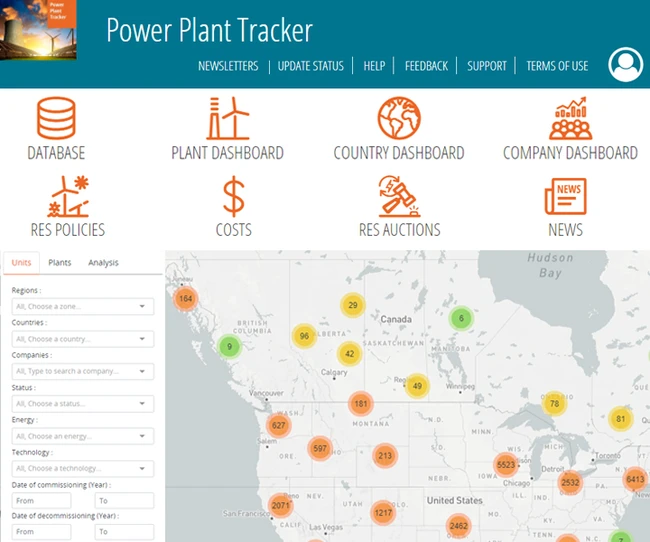
Interested in Power Plants?
Enerdata has developed a market research service to screen, monitor and analyse the development of power generation assets.
Power Plant Tracker offers an interactive database and a powerful search engine covering power plants worldwide – including both installed and planned capacities for renewables and fossil fuels.