The Ministry of Mineral Resources and Energy of South Africa has announced that the government intends to create a new power generation company, distinct from state-owned power utility Eskom. Ideally, the new power generation company would be a partnership between the government and private investors and would use diversified energy sources (clean coal, gas and solar power). The type of company - state or privately-owned - and its scope remain to be determined; investors are invited to partner with the government or to invest on their own to create a new company.
In addition, South Africa could deregulate self-generation of electricity in the mining sector, authorising power production for self-use without a licence. However, only licensed producers could legally market electricity. According to the Mineral Councils (South Africa’s mining industry body), mining companies could develop 500 MW to 1,500 MW of self-generation capacity over the next few years once the sector is liberalised.
As stated by the Integrated Resource Plan until 2030, published in October 2020, there is a short-term supply gap of approximately 2 GW. This figure has recently been updated by South African power utility Eskom to about 3 GW. In December 2019, the Department of Mineral Resources and Energy (DMRE) launched a Risk Mitigation Power Purchase Programme, with the objective to procure between 2-3 GW of power generation capacity that can be connected to the grid in the shortest time at the least possible cost. Eskom is implementing rolling load-shedding since end-January 2020, cutting up to 2 GW of power demand off the national power grid to avoid a collapse of the system. According to Eskom, the situation is due to system constraints and the depletion of emergency reserves.
Interested in Power Plants?
Enerdata has developed a market research service to screen, monitor and analyse the development of power generation assets.
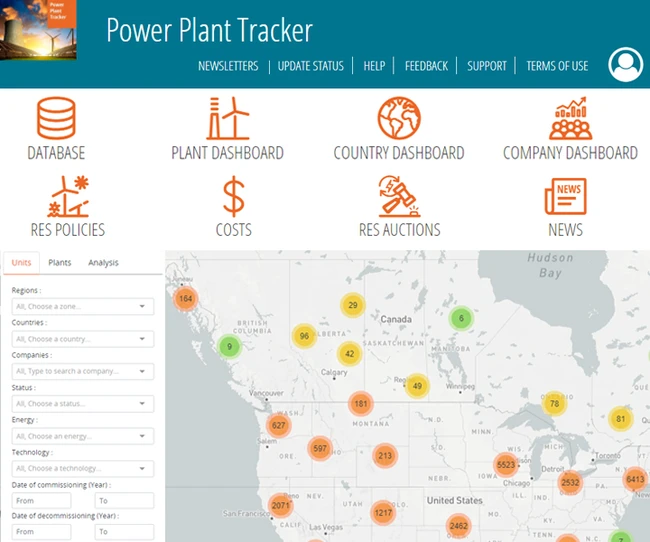
Power Plant Tracker offers an interactive database and a powerful search engine covering power plants worldwide – including both installed and planned capacities for renewables and fossil fuels.