During the COP 26, several countries have announced plans to raise the share of renewables in their power mix. The Ministry of Energy of Russia, which had already approved a long-term government climate strategy targeting carbon neutrality by 2060, will seek to increase the share of CO2-free energies in its power mix from the current 41% to at least 56.5% by 2050: 25% would come from nuclear, 19% from hydropower and 12.5% from renewables. The share of fossil fuels in the power mix should then decrease to less than 44%: gas would account for the bulk (40% share in the power mix), with coal-fired generation covering up to 4% of the total power generation in 2050. Russia's first renewable support programme, which will run until the end of 2024, has already selected 5.4 GW of projects and should help commission 8-9 GW of renewable projects by 2035. The renewable capacity is expected to rise to 97 GW by 2050 (from less than 54 GW at the end of 2020, including hydropower and biomass), while more than 22 GW of existing coal-fired power plants will be decommissioned.
Bangladesh, which updated its Nationally Determined Contribution (NDC) in August 2021, has confirmed plans to cut its CO2 emissions by nearly 22% by 2030 (nearly 90 Mt). The country, which has cancelled 10 coal-fired power plants, aims to reach 4.1 GW of renewable capacity by 2030 (up from less than 600 MW at the end of 2020 and around 780 MW currently), including nearly 2.3 GW of solar capacity. Nine solar projects totalling 450 MW are already under construction and Bangladesh's renewable capacity could rise to 1 GW by the end of December 2021.
Ivory Coast plans to cut its greenhouse gas (GHG) emissions by 30.41% by 2030, corresponding to a 37 MtCO2eq cut. The country's first NDC (2016) had set a target of reducing GHG emissions by 28% by 2030, i.e. a 9 MtCO2eq cut. Reduction efforts will focus on reforesting, raising the share of renewables in the power mix to 45% by 2030, phasing out coal-fired generation, improving energy efficiency in buildings, and improving waste management to recover methane emissions.
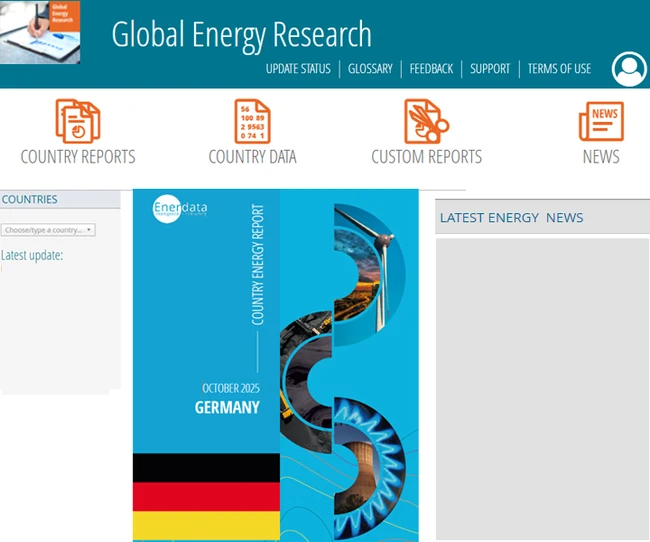
Interested in Global Energy Research?
Enerdata's premium online information service provides up-to-date market reports on 110+ countries. The reports include valuable market data and analysis as well as a daily newsfeed, curated by our energy analysts, on the oil, gas, coal and power markets.
This user-friendly tool gives you the essentials about the domestic markets of your concern, including market structure, organisation, actors, projects and business perspectives.