According to Canada's energy regulator, the National Energy Board, Canada generated more than 60% of its power mix from renewable energy sources in 2015 (58% from hydropower and 7% from other sources, mainly wind and solar).
Hydropower is the largest source of electricity in Canada, accounting for more than half of total installed capacity and for nearly 60% of its generation (more than 85% in British Columbia, Manitoba, Quebec, Newfoundland & Labrador and Yukon). Non-hydro renewable capacities rose from 2% of total Canadian capacity in 2005 to about 10% in 2015 (only 7% of generation, with peaks of 34% of renewables in the power mix of Ontario and 24% in Nova Scotia).
The province of Saskatchewan, which currently generates 83% of its power from coal and gas, aims to reach 50% from renewables by 2030, while Alberta aims to phase out coal-fired generation and Manitoba plans to cut greenhouse gas (GHG) emissions by 1/3 by this date. The power sector only accounts for 11% of Canadian GHG emissions (-40% between 2010 and 2014), largely behind oil and gas production (26% in 2014) and transport (23%).
Interested in Power Plants?
Enerdata has developed a market research service to screen, monitor and analyse the development of power generation assets.
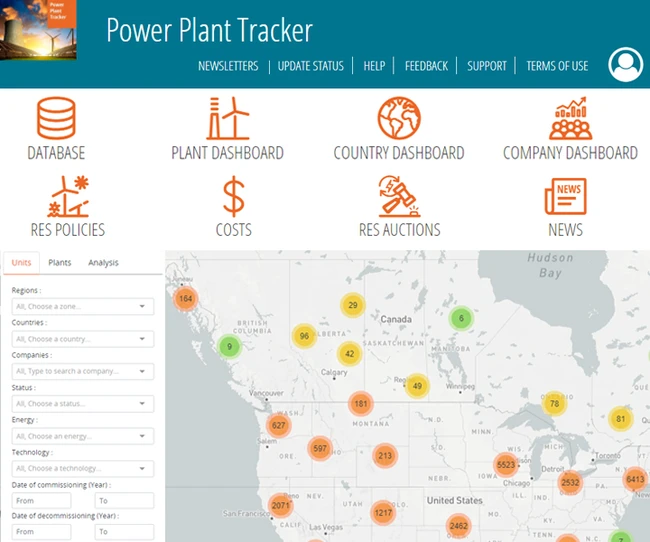
Power Plant Tracker offers an interactive database and a powerful search engine covering power plants worldwide – including both installed and planned capacities for renewables and fossil fuels.