According to a new report by the World Bank, the number of implemented or scheduled carbon pricing instruments has nearly doubled since 2012, from 20 to 38, and they are now worth about US$50bn. Currently, 39 national jurisdictions and 23 subnational jurisdictions have approved carbon pricing instruments, which covers around 12% of annual global greenhouse gases (GHG) emissions (8% through emission trading schemes or ETS and 4% through carbon taxes), compared to around 4% of global emissions covered in 2005.
The United States and China, the world's largest GHG emitters, have introduced carbon pricing initiatives: in China, around 1 GtCO2 of emissions is covered (seven pilot carbon markets in major cities and nationwide programme expected in 2016), while around 0.5 GtCO2 is covered in the United States.
The EU ETS is the largest carbon instrument in terms of value, followed by the trading systems in Korea and California. Around 85% of emissions covered are priced below US$10/tCO2 but some European carbon taxes exceed the US$40/tCO2 level (US$48/tCO2 for heating fuels and US$64/tCO2 for transport fuels in Finland, US$52/tCO2 carbon tax in Norway, US$62/tCO2 carbon tax in Switzerland, US$64/tCO2 carbon tax in Finland and US$130/tCO2 in Sweden). In 2014-2015, six jurisdictions implemented new carbon pricing instruments: ETSs were implemented in Hubei and Chongqing in China while carbon taxes were introduced in France and Mexico; in 2015, South Korea introduced a new ETS, while Portugal adopted a carbon tax.
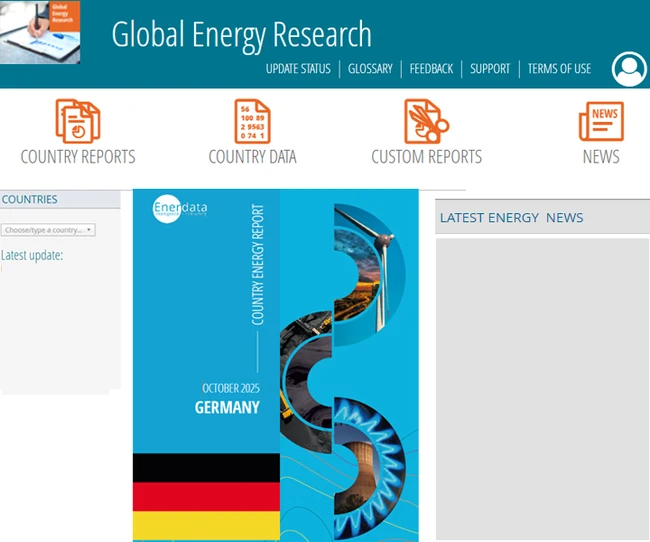
Interested in Global Energy Research?
Enerdata's premium online information service provides up-to-date market reports on 110+ countries. The reports include valuable market data and analysis as well as a daily newsfeed, curated by our energy analysts, on the oil, gas, coal and power markets.
This user-friendly tool gives you the essentials about the domestic markets of your concern, including market structure, organisation, actors, projects and business perspectives.