The National Economic Council (NEC) of Nigeria, which has the mandate to advise the president on economic policy issues and to coordinate planning efforts at different levels of government, has passed a motion demanding the re-examination of the power sector privatisation, due to structural problems in electricity supply.
The power sector was overhauled in 2013, with the privatisation of the national electricity company and the development of a competitive electricity market. The dismantling of the national electricity company led to the creation of 6 generation companies, 1 transmission company (the sole that remained under government control) and 11 distribution companies. Currently, the state-owned Nigeria Bulk Electricity Trader (NBET) purchases electricity from generation companies and sells it to distribution companies. However, as NBET is not reimbursed in full for the power it acquires, generations companies are only partly paid for their outputs. These persistent revenue shortfalls has hindered plans to build private power plants in recent years.
Despite reforms and the privatisation of generation and distribution companies, some 80 million Nigerians remain without access to electricity, the grid is plagued by frequent blackouts and the government has supported the power sector with NGN1,700bn (US$5.6bn) since 2017.
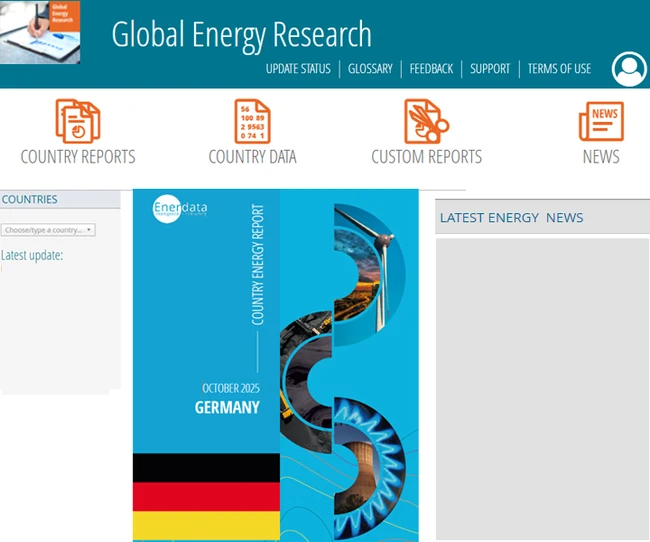
Interested in Global Energy Research?
Enerdata's premium online information service provides up-to-date market reports on 110+ countries. The reports include valuable market data and analysis as well as a daily newsfeed, curated by our energy analysts, on the oil, gas, coal and power markets.
This user-friendly tool gives you the essentials about the domestic markets of your concern, including market structure, organisation, actors, projects and business perspectives.