As part of negotiations between Germany's leading party CDU-CSU and SPD over a potential "Great Coalition" following general elections of late September 2012, the parties have agreed to reform renewable incentives by the summer 2014. The new coalition will focus on reforming the EEG, in an attempt to stem up the increase in residential electricity prices, since residential bills have almost doubled over the past decade to €300/MWh, and to give utilities more time to adapt their business model. A draft reform on the Renewable Energy Law should be submitted by Easter 2014, and the law should be approved by summer 2014. The new coalition aims to gradually cut subsidies and to entirely scrap some grants: grants will be handed out through competitive tenders as of 2018, based on a 400 MW PV pilot tender scheme to be launched in 2016. According to the agreement, Germany will still target a 40%-45% share of renewable in electricity by 2025 and 55%-60% by 2030. Germany will continue to exit from nuclear power, with the last reactor planned to be taken off the grid by 2022. To improve and secure power supply, the government will encourage the modernisation and expansion of the power grid, and will try to implement a framework in which coal-fired and gas-fired power plants could be profitably used as backup for the renewable capacity. These announcements were welcomed by power utilities.
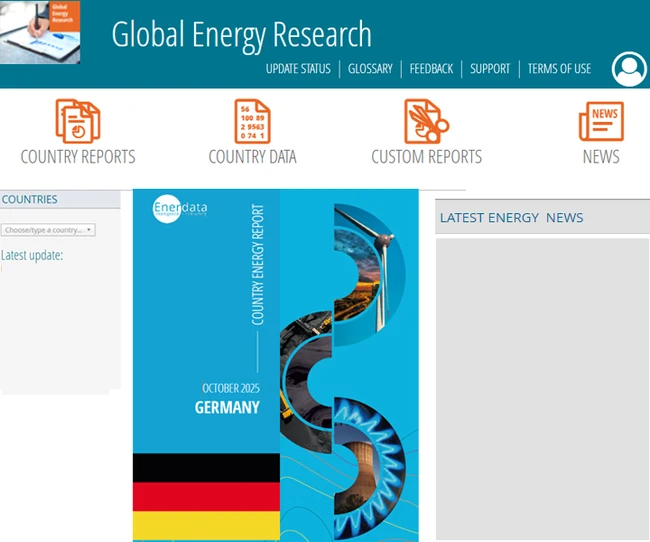
Interested in Global Energy Research?
Enerdata's premium online information service provides up-to-date market reports on 110+ countries. The reports include valuable market data and analysis as well as a daily newsfeed, curated by our energy analysts, on the oil, gas, coal and power markets.
This user-friendly tool gives you the essentials about the domestic markets of your concern, including market structure, organisation, actors, projects and business perspectives.