Japan’s Kansai Electric Power Company (KEPCO) is seeking to extend by 20 years the lifespan of units 3 and 4 of its Takahama nuclear power plant, located in the Fukui prefecture (central Japan). KEPCO has submitted an application to Japan’s Nuclear Regulation Authority (NRA) for permission to extend the lifespan of the two 830 MW units beyond the maximum 40 years.
The two reactors, both commissioned in 1985, will reach the end of their 40-year operating lives in 2025. The Takahama nuclear plant also hosts two 780 MW pressurised water reactors (Takahama1 and 2) which were commissioned in 1974 and 1975. Takahama 1 and 2 became the first Japanese units to be granted a licence extension beyond 40 years under revised regulations, but are currently out of service pending upgrades required by the regulator. They are expected to restart during the course of 2023.
In February 2023, the Japanese Government approved a new green transformation policy that paves the way for the construction of new advanced nuclear reactors and allows the operation of nuclear reactors beyond their current 60-year limit. Under current rules introduced after the 2011 Fukushima nuclear accident, the operating life of a nuclear reactor is 40 years in principle. However, reactors and their vessels that pass the degradation inspections of the NRA can operate for an additional 20 years.
Japan’s reliance on nuclear power was reduced following the Fukushima accident, dropping from 25% of the power mix in 2010 to 1% in 2015, and back to 6.7% in 2021. Before the accident, there were 54 reactors spread over 17 power plants (49 GW in 2010 against 33 GW in 2021).
Interested in Power Plants?
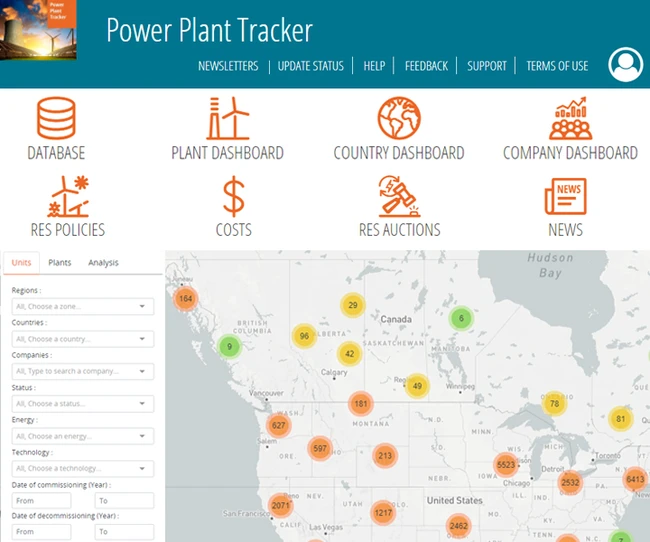
Enerdata has developed a market research service to screen, monitor and analyse the development of power generation assets.
Power Plant Tracker offers an interactive database and a powerful search engine covering power plants worldwide – including both installed and planned capacities for renewables and fossil fuels.