According to Italian TSO Terna, Italy's electricity consumption remained relatively stable at 311 TWh in 2025, of which 41% came from renewable sources (from 42% in 2024) (Terna press release, 21/01/2026). Energy consumption during the year reported a negative trend during the first half of 2025, followed by a recovery in the second half “supported by growth in industrial consumption” (particularly in iron and steel; cement, lime and gypsum, and food sectors).
85% of the country’s energy demand came from domestic production (268 TWh, +2% compared to 2024), while the remaining 15% came from imports. The net import-export balance decreased by 8% (lower imports and stable exports). Overall, renewable power generation remained stable. Solar was the largest contributor, covering 14.5% of total electricity consumption, since solar power generation surged by 25% to 44 TWh. The increase is due to an increase of 6.4 GW of solar capacity and a higher solar irradiation. Meanwhile, hydropower generation fell by 21%, returning to standard levels after a record production registered in 2024, and covered 13.5% of electricity consumption in 2025. Wind power generation dipped by 3.3% (+0.6 GW installed during the year) but still covered 7% of electricity consumption, while geothermal production remained stable.
Lower imports and stable renewable generation contributed to a 4.6% increase in thermal power generation. However, coal-fired generation continued to decline (-13.5%).
Installed capacity grew by 7.2 GW in 2025 to 83.5 GW, spurred by solar installations (+6.4 GW). Solar capacity reached 43.5 GW and wind 13.6 GW. In addition, storage capacity increased by 1.7 GW, including 723 MW of utility-scale storage systems, to 7.4 GW (17.9 GWh).
Interested in Power Plants?
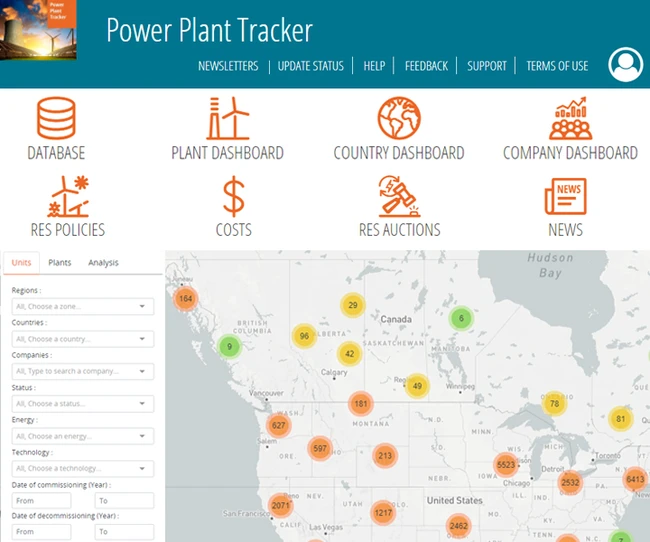
Enerdata has developed a market research service to screen, monitor and analyse the development of power generation assets.
Power Plant Tracker offers an interactive database and a powerful search engine covering power plants worldwide – including both installed and planned capacities for renewables and fossil fuels.