The Israeli government has presented an ILS80bn (US$23bn) plan to increase the share of solar in the power generation to 30% by 2030, when solar power should cover more than 80% of the country's electricity needs at peak hours. Most of the funding will go to solar plants, which will be built by private operators. In addition, the government will finance the upgrade of the national grid and investments in energy storage. Israel aims at reaching 16 GW of solar capacity by 2030. In parallel, coal-fired generation will be completely phased out. As of May 2020, Israel’s coal-fired power capacity stood at 4.8 GW and solar capacity at 1.4 GW, accounting respectively for 27% and 8% of the total capacity.
Earlier in April 2020, as part of its ILS25bn (US$7.1bn) economic plan to recover from the impact of the COVID-19, the Israeli government proposed to invest ILS6.5bn (US$1.9bn) to instal of 2 GW of additional solar power capacity. Israel plans ILS3.5bn (US$1bn) of loans and ILS500m (US$143m) of state guarantees for solar project developers. The government also plans to relaunch the tender of the Dimona solar project in the Negev desert, whose capacity will be extended from 300 MW to 500 MW. The tender, which was launched in January 2020 but cancelled one month later over land problems, is expected to mobilise around ILS1bn (US$286m) of investments. The government also seeks to cut red tape and improve grid-connection for renewable projects.
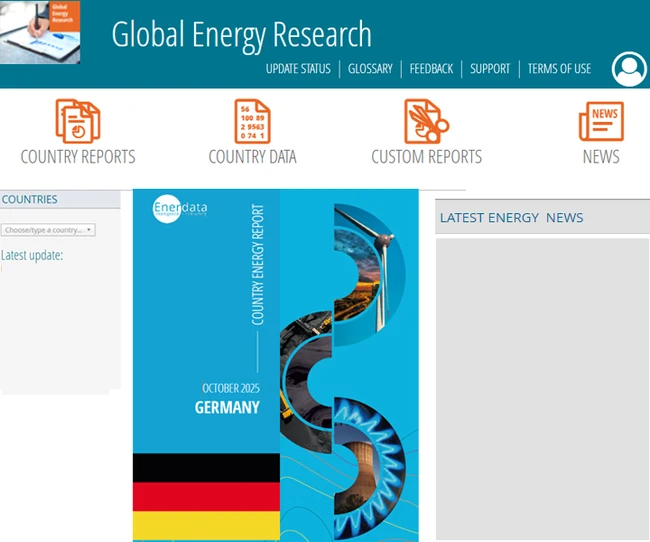
Interested in Global Energy Research?
Enerdata's premium online information service provides up-to-date market reports on 110+ countries. The reports include valuable market data and analysis as well as a daily newsfeed, curated by our energy analysts, on the oil, gas, coal and power markets.
This user-friendly tool gives you the essentials about the domestic markets of your concern, including market structure, organisation, actors, projects and business perspectives.