The Ministry of Industry of Indonesia plans to include nine industrial branches in CO2 carbon trading activities as of 2027, namely cement, textiles, steel and metal, paper and pulp, ceramics and glasses, food and beverage, fertilisers, transportation means, and chemicals. The Ministry has also launched the standardisation of green industries to contribute to the reduction of greenhouse gas (GHG) emissions.
In February 2023, the Indonesian Ministry of Energy and Mineral Resources (ESDM) launched carbon trading for 99 grid-connected coal-fired power plants owned and operated by the country’s state-owned electricity company PT Perusahaan Listrik Negara (PLN) (total capacity of 33.6 GW). The scheme will expand to off-grid coal-fired plants in 2025, and will cover other fossil-based power plants in 2028. In September 2023, Indonesia's first carbon emission credit trading (IDXCarbon) was launched, aiming to develop a market that will allow the reduction of GHG emissions. There are four IDXCarbon trading mechanisms, namely Auction Market, Regular Market, Negotiated Market, and Marketplace, and trading is voluntary. In January 2025, Indonesia unveiled its first international carbon trade transactions at the Indonesian Stock Exchange (BEI).
Indonesia's Enhanced Nationally Determined Contribution (NDC) aims at reducing greenhouse gas emissions by 915 Mt by 2030, most of which in forestry and land use (500 MtCO2eq) and in the energy sector (358 MtCO2eq).
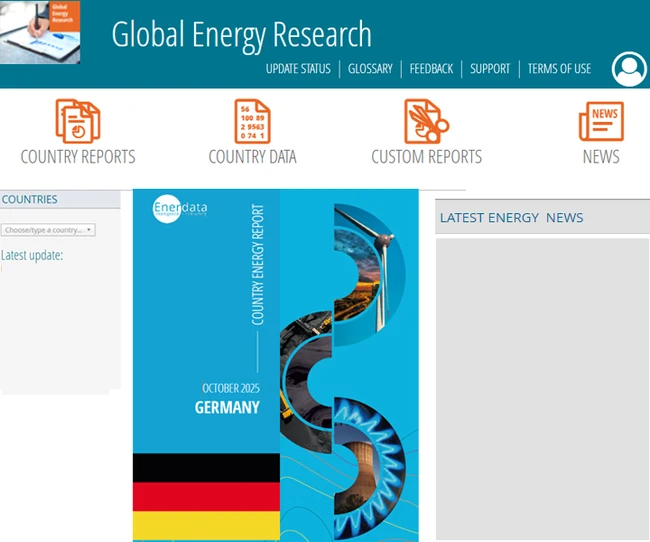
Interested in Global Energy Research?
Enerdata's premium online information service provides up-to-date market reports on 110+ countries. The reports include valuable market data and analysis as well as a daily newsfeed, curated by our energy analysts, on the oil, gas, coal and power markets.
This user-friendly tool gives you the essentials about the domestic markets of your concern, including market structure, organisation, actors, projects and business perspectives.