According to the Ministry of New and Renewable Energy (MNRE) of India, total installed solar power capacity in India exceeded the 8 GW threshold at the end of July 2016, rising from 5,287 MW at year-end 2015 to 7,805 MW in late June 2016 and to 8,062 MW in late July 2016 (capacity addition of 527 MW in July).
The state of Rajasthan accounted for 16% of the total capacity, with 1,295 MW, followed by Tamil Nadu (1,267 MW, 16%) and Gujarat (1,123 MW, 14%); the three states accounted for nearly half of solar capacities. However, Rajasthan and Tamil Nadu have curtailed solar power in recent months.
During the current fiscal year (April 2016-March 2017), more than 10 GW should be installed. India has set a target of 100 GW of solar capacity in 2022, including 40 GW from solar rooftop capacity.
The country bets on distributed solar projects to boost electrification, as part of its Deen Dayal Upadhyaya Gram Jyoti Yojana (DDUGJY) policy to provide access to electricity to villages with limited grid connectivity. So far, 4,606 distributed generation projects (biomass, biofuels, biogas, small hydro and solar projects) have benefited from a 60% subsidy on the project costs as part of the DDUGJY scheme; an additional 15% subsidy is also offered for timely completion of these projects.
Interested in Power Plants?
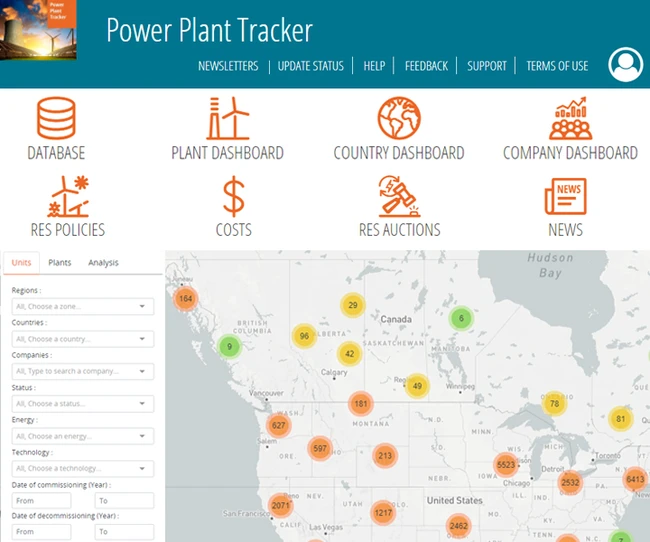
Enerdata has developed a market research service to screen, monitor and analyse the development of power generation assets.
Power Plant Tracker offers an interactive database and a powerful search engine covering power plants worldwide – including both installed and planned capacities for renewables and fossil fuels.