The Indian Ministry of Power has initiated a public consultation on a new Draft National Electricity Policy (NEP) 2026, targeting per capita electricity consumption of 2,000 kWh by 2030 and over 4,000 kWh by 2047, up from less than 1,500 kWh in 2024-2025 (Indian Ministry of Power press release, 21/01/2025). It aligns with the country’s climate pledges, including reduction of emissions intensity by 45% below 2005 levels by 2030 and achievement of net-zero emissions by 2070.
Concerning renewable energy generation and storage, it aims for capacity addition through market-based mechanisms and captive power plants, as well as parity between renewables and conventional sources in scheduling and deviation by 2030. It targets market-based deployment of storage, using emerging Battery Energy Storage System (BESS) technologies and demand side incentives like Viability Gap Funding (VGF) for BESS and pumped-storage projects.India should also adopt advanced nuclear technologies, develop modular reactors, deploy small reactors (SMRs), and enable commercial/industrial users to consume nuclear power to reach 100 GW of nuclear capacity by 2047. Thermal generation is expected to be paired with storage, while older units are to be repurposed for grid, helping the system absorb a larger share renewables.
The country also plans to make tariffs gradually recover fixed costs via demand charges to avoid cross-subsidisation between the tariff components as well as among various categories of consumers. It intends to create a Distribution System Operator (DSO) to facilitate sharing of network and integration of distributed renewables, storage, Vehicle-to-Grid (V2G) systems. It also aims to functionally unbundle State Transmission Utilities (STUs) and create independent state-level entities to manage SLDC (State Load Despatch Centre) operations and transmission planning functions.
The country’s electricity capacity amounts to 534 GW (2024), with the following capacity mix: coal 50%, solar 18%, hydro 10%, wind 9%, gas 6%, oil 4%, biomass 2%, and nuclear 1%, according to Enerdata’s Global Energy and CO2 Data. The renewable capacity reached 209 GW in 2024 (39% of the total), 97 GW of which from solar, 52 GW from hydro, and 48 GW from wind. Coal still dominates the power mix with 70% in 2024. Yet, its share has decreased by 8 points since 2015. Hydro ranks second (8%), followed by solar (7%), wind (5%), biomass (4%), nuclear (3%), gas (3%), and oil (less than 1%). The share of renewables has increased by 10 points since 2015 to 24%. The share of CO2-free sources reached 23% in 2024 (+8 points since 2015)
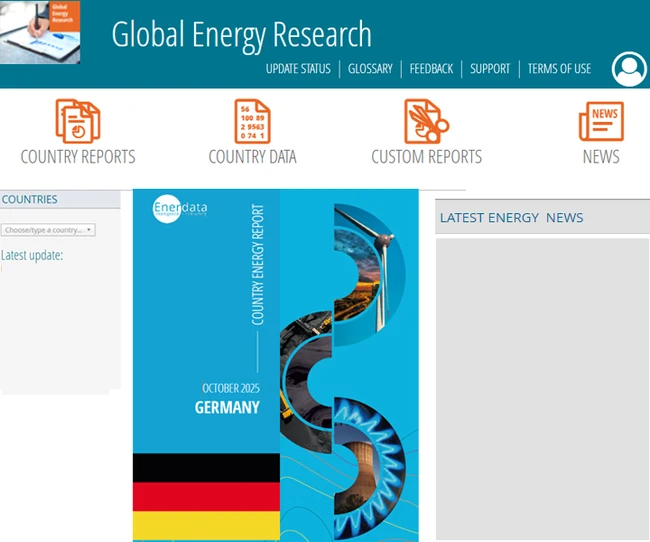
Interested in Global Energy Research?
Enerdata's premium online information service provides up-to-date market reports on 110+ countries. The reports include valuable market data and analysis as well as a daily newsfeed, curated by our energy analysts, on the oil, gas, coal and power markets.
This user-friendly tool gives you the essentials about the domestic markets of your concern, including market structure, organisation, actors, projects and business perspectives.