The US Energy Information Administration (EIA) forecasts that global nuclear capacity will grow at an average yearly rate of 1.6% over the 2016-2040 period. This trend is likely to be driven predominantly by countries outside the Organization for Economic Cooperation and Development (OECD) and in particular China and India. Besides, this growth will be offset by the nuclear capacity decline in the United States (US), Japan and Europe.
According to the EIA, decisions to build new nuclear reactors and retire existing reactors is correlated with the electricity demand growth and the non-OECD power demand growth will be exceeding that of the United States, Europe and Japan.
China is already building 19 new nuclear reactors with a combined capacity of 19.9 GW, as part of plans to install around 58 GW of new nuclear capacity by 2024. The country is expected to surpass the United States in terms of nuclear electricity generating capacity by 2032. Meanwhile, the US nuclear capacity is projected to decrease by 12 GW by 2040, from the current 100 GW to 88 GW, as operators may retire units before their scheduled license expirations.
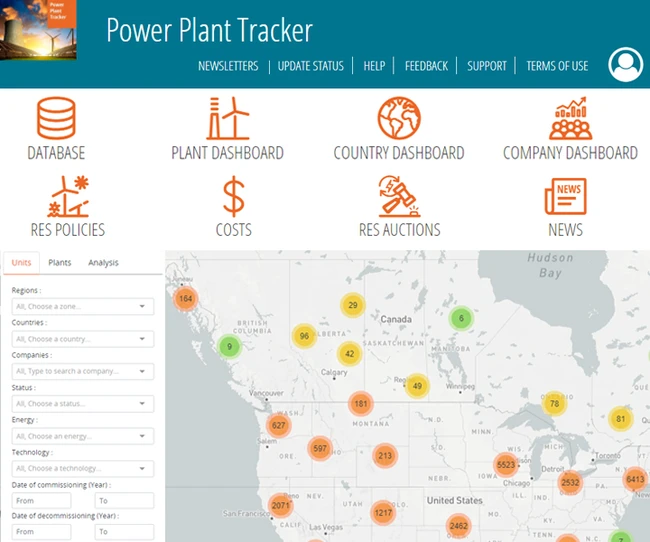
Interested in Power Plants?
Enerdata has developed a market research service to screen, monitor and analyse the development of power generation assets.
Power Plant Tracker offers an interactive database and a powerful search engine covering power plants worldwide – including both installed and planned capacities for renewables and fossil fuels.