According to the International Atomic Energy Agency's latest report, International Status and Prospects for Nuclear Power 2017, nuclear long-term potential remains high, in spite of an expected slowdown in coming years.
In the short-term, nuclear capacity should decline due to the retirement of old units and lower investments to extend the life of existing plants (lower competitiveness of nuclear power and adverse nuclear policies in some countries after the 2011 Fukushima disaster). The low case projects a decline in capacity by 12% in 2030 (compared to 2016 levels of 392 GW) to 345 GW and by 15% in 2040 to 332 GW before rebounding to present levels by 2050. Up to 320 GW of new nuclear power capacity could be built by 2050, making up for the loss of retired units. Nuclear capacity should particularly decline in North America and Europe (expected Eastern Europe) with slight increase in Africa and western Asia; it should grow by 43% in central and eastern Asia by 2050.
In the high-case scenario, global nuclear power capacity could increase by 43% in 2030 - compared to 2016 levels - to 554 GW, by 83% in 2040 to 717 GW and by 123% in 2050 to 874 GW. This doubling in capacity would be pulled by central and eastern Asia, where capacity would more than double by 2030, increase 2.9 times by 2040, and increase about 3.5 times by 2050, compared to current levels.
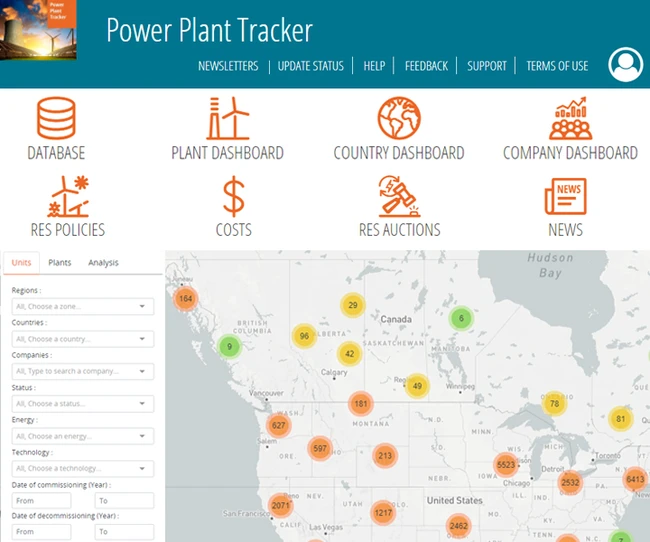
Interested in Power Plants?
Enerdata has developed a market research service to screen, monitor and analyse the development of power generation assets.
Power Plant Tracker offers an interactive database and a powerful search engine covering power plants worldwide – including both installed and planned capacities for renewables and fossil fuels.