The German energy company RWE has brought forward its coal phase-out target by eight years to 2030, from 2038 originally. The decision of RWE to end lignite-based electricity generation in 2030 is part of an agreement between the company, the German Federal Ministry of Economics and Climate Protection and the Ministry of Economic Affairs, Industry, Climate Action and Energy of the State of North Rhine-Westphalia.
RWE has simultaneously announced that two coal-fired plant units totalling 1.2 GW, Neurath D and E, will temporarily remain active due to the energy situation in Europe. Their decommissioning, originally scheduled for the end of 2022, has been deferred until 31 March 2024.
Germany has until 2023 to extend the coal units’ lifetime or to transfer the units to a power plant reserve, with both options limited until 31 March 2025. In addition, to safeguard security of supply beyond 2030, the German government can also decide by 2026 to keep RWE’s last lignite-fired plants, with a combined capacity of 3.6 GW, on standby until the end of 2033 (Niederaussem K and H, and Neurath F and G).
To offset the impact of the coal phase-out on North Rhine-Westphalia, RWE also aims to develop 3 GW of hydrogen-ready gas-fired power plants in the region.
Germany also plans a national coal phase-out by 2030. In 2021, coal still represented 16% of Germany’s installed capacity with 37 GW and 29% of its power generation with 170 TWh.
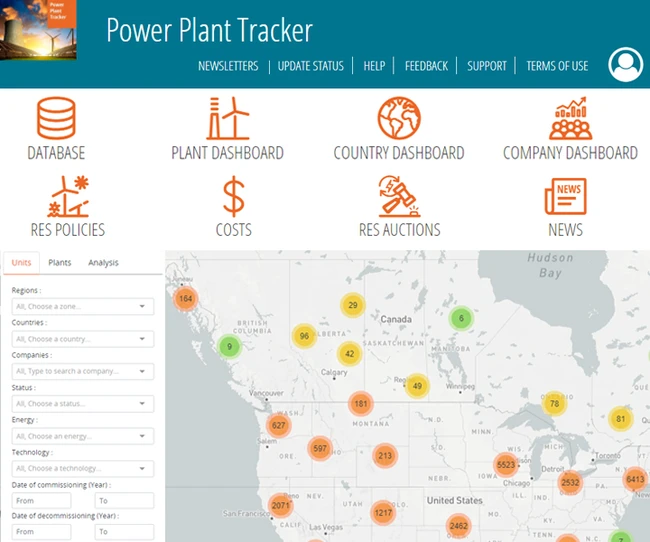
Interested in Power Plants?
Enerdata has developed a market research service to screen, monitor and analyse the development of power generation assets.
Power Plant Tracker offers an interactive database and a powerful search engine covering power plants worldwide – including both installed and planned capacities for renewables and fossil fuels.