The German energy regulator Bundesnetzagentur (BNA) has announced that support for onshore wind energy plants would be reduced by 1.2% and by 0.5% for biomass as of 1 April 2016.
According to the Renewable Energy Sources Act (EEG) 2014, the support level (reference value) for electricity produced by onshore wind and biomass power plants must be adjusted quarterly as of 2016. The basic reduction is set at 0.4% for wind and 0.5% for biomass, but greater cuts can be applied if net newly installed capacities over the past 12 month-period exceed defined corridor. At 3,712 MW, the net expansion of onshore wind capacity is considerably above the upper limit of the deployment corridor (2,400 to 2,600 MW), prompting the BNA to apply a greater cut in tariff. For biomass, total newly installed capacity from biomass amounted to 67 MW, below the set deployment limit of 100 MW, which means that the support will be cut by the basic level of 0.5%.
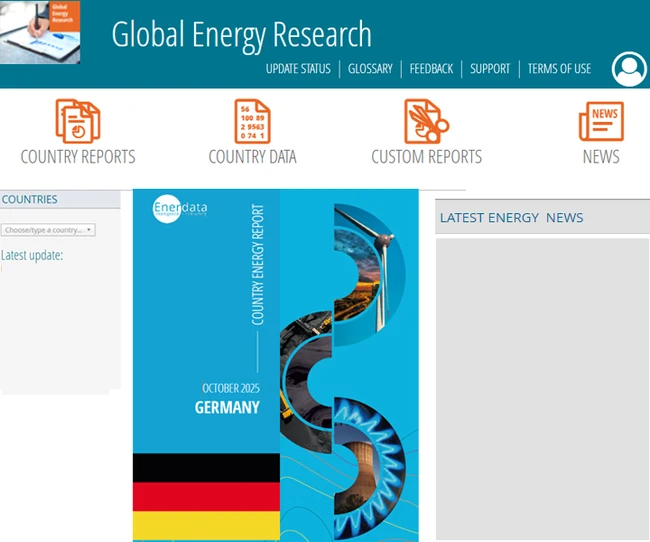
Interested in Global Energy Research?
Enerdata's premium online information service provides up-to-date market reports on 110+ countries. The reports include valuable market data and analysis as well as a daily newsfeed, curated by our energy analysts, on the oil, gas, coal and power markets.
This user-friendly tool gives you the essentials about the domestic markets of your concern, including market structure, organisation, actors, projects and business perspectives.