The German government has reached an agreement with the European Commission over exemptions to the renewable energy surcharge granted to industrial companies producing electricity for their own consumption.
Until 2014, energy-intensive companies were exempted from paying the renewable energy surcharge (EEG surcharge) to avoid soaring costs for industrial customers. In 2014, the European Commission considered that this exemption was not unfair competition but approved it only for auto-producing industrial companies until 2017. It also proposed that industrial companies generating their own power pay at least 20% of the EEG surcharge by 2019 at the latest, while new power plants would pay the entire surcharge; Germany rejected that EU proposal.
The new agreement allows a full exemption of the EEG surcharge for existing auto-production CHP plants; in case of significant modernisation (generator replacement), a 20% EEG surcharge will apply. New auto-production installations will have to pay the entire EEG surcharge, but only 40% of the surcharge in the case of renewable or high-efficiency CHP facility.
Germany also plans to tender 400 MW per year of renewable capacity (onshore wind and solar PV) as of 2018 and an innovative tender for 50 MW per year of new installations contributing to system stabilization. The CHP support will continue for new and modernised CHP plants between 1 and 50 MW (tender expected in winter 2017-2018); CHP facilities up 1 MW or above 50 MW will also benefit from unchanged support.
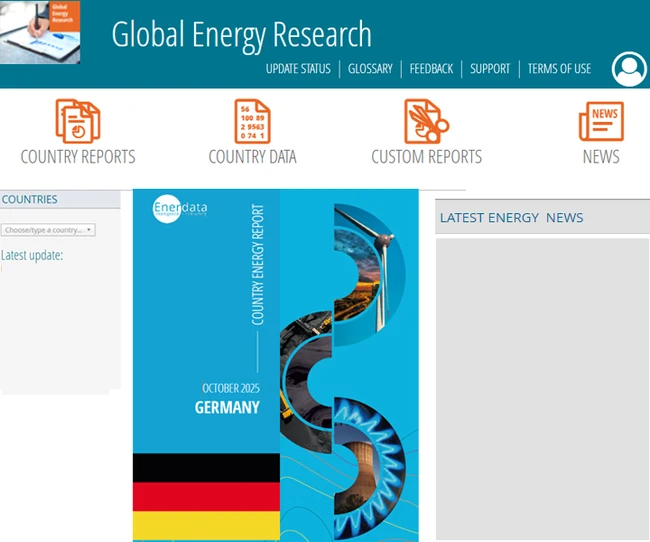
Interested in Global Energy Research?
Enerdata's premium online information service provides up-to-date market reports on 110+ countries. The reports include valuable market data and analysis as well as a daily newsfeed, curated by our energy analysts, on the oil, gas, coal and power markets.
This user-friendly tool gives you the essentials about the domestic markets of your concern, including market structure, organisation, actors, projects and business perspectives.