Germany has agreed to mothball about five of the largest lignite-fired power plants in the country, representing a total capacity of 2.7 GW, to meet its target of reducing CO2 emissions by 40% by 2020 compared to 1990. The power plants will be in "capacity reserve" and will be used only in case of power shortages; they will no longer be allowed to sell power on the normal power market.
In December 2014, the German government had approved a climate package aiming at forcing coal-fired power plant operators to reduce their CO2 emissions by at least 22 Mt by 2020, which would correspond to the closure of eight coal-fired power plants. That target was reduced to 16 Mt, due to the opposition of the industry. In turn, trade union IG BCE proposed to gradually shut down 2.7 GW of coal-fired power plants to limit CO2 emissions and to replace them with gas-fired CHP power plants.
In addition, the government has settled a dispute over high-voltage power transmission lines aimed at delivering wind power from the north to the industrial south. The coalition reached an agreement to have a uniform price structure and to avoid bottlenecks.
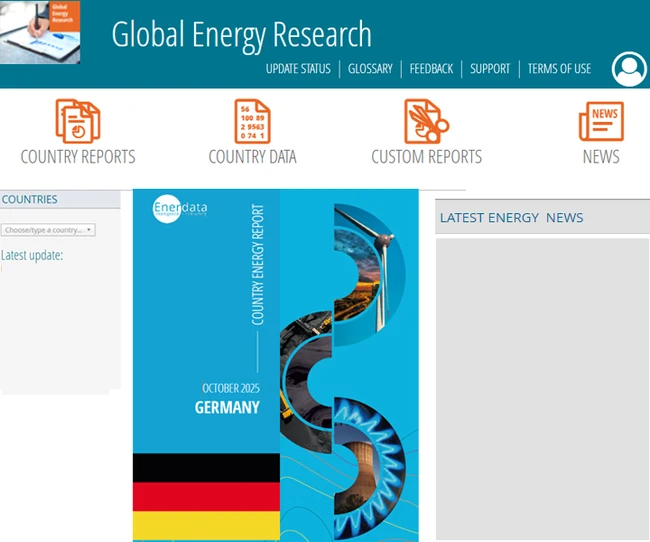
Interested in Global Energy Research?
Enerdata's premium online information service provides up-to-date market reports on 110+ countries. The reports include valuable market data and analysis as well as a daily newsfeed, curated by our energy analysts, on the oil, gas, coal and power markets.
This user-friendly tool gives you the essentials about the domestic markets of your concern, including market structure, organisation, actors, projects and business perspectives.