The German government has adopted the final version of its national energy and climate plan (NECP). According to the plan, Germany intends to reduce greenhouse gas (GHG) emissions by at least 55% by 2030 compared to 1990, to cut primary energy consumption by 30% by 2030 compared to 2008 and to increase the share of renewables in gross final energy consumption to 30% by 2030. The national energy and climate plans, which were supposed to be sent to the European Commission by 31 December 2019, summarise how the EU members states plan to deal with energy efficiency, renewables and GHG emissions reductions.
According to the German Federal Environment Ministry, the country's 2030 climate protection programme is expected to reduce Germany's GHG emissions by 51% by 2030 compared to 1990 (from 1,252 MtCO2eq in 1990 to 614 MtCO2eq in 2030), falling short to achieve the target of at least 55% reduction by 2030 (down to 543 MtCO2eq). Germany will thus have to accelerate efforts to meet its GHG reduction target, especially in the sectors of transports, which is expected to post a 33 MtCO2eq gap (GHG emissions of 128 MtCO2eq vs a target of 95 MtCO2eq), and in buildings, where GHG emissions should be 17 MtCO2eq higher than the 70 MtCO2eq target. Emissions from the energy sector are also expected to exceed the target by 11 MtCO2eq, at 186 MtCO2eq.
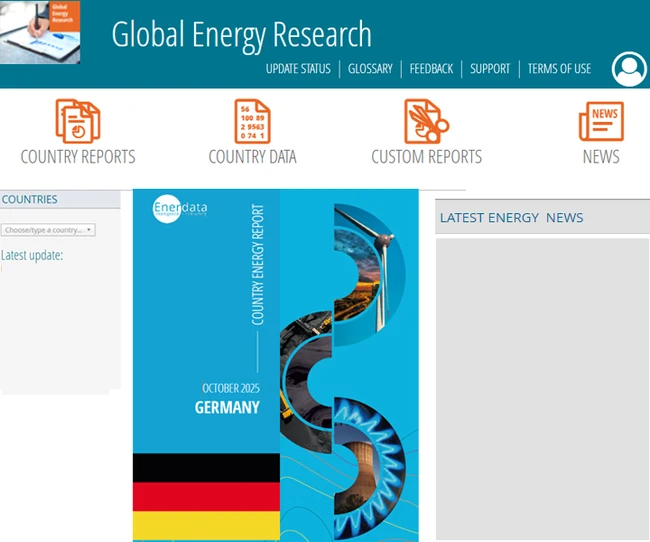
Interested in Global Energy Research?
Enerdata's premium online information service provides up-to-date market reports on 110+ countries. The reports include valuable market data and analysis as well as a daily newsfeed, curated by our energy analysts, on the oil, gas, coal and power markets.
This user-friendly tool gives you the essentials about the domestic markets of your concern, including market structure, organisation, actors, projects and business perspectives.