The German government aims to make investments in new LNG projects easier, in order to diversify gas supply sources. The government's draft legislation proposes to reduce cost related to the connection of LNG projects to domestic gas pipelines: LNG project developers would only have to pay 10% of the connection costs, instead of paying network usage fees covering the pipeline development cost to pipeline companies. The draft has now to be approved by the Bundesrat, the Upper House of Parliament.
Germany is seeking to diversify its gas supply, even if additional gas volumes will be imported from Russia through the Nord Stream 2 gas pipeline project. Developing LNG projects could help Germany complement gas imports from Russia, Norway and the Netherlands with LNG supply, especially at a time when Qatar and the United States plan to boost their LNG exports. Three LNG projects are under development in the country, a 10 bcm/year floating storage and regasification unit (FSRU) in Wilhelmshaven by Uniper, an 8 bcm/year terminal in Brunsbüttel and a 4 bcm/year terminal in Stade by Dow.
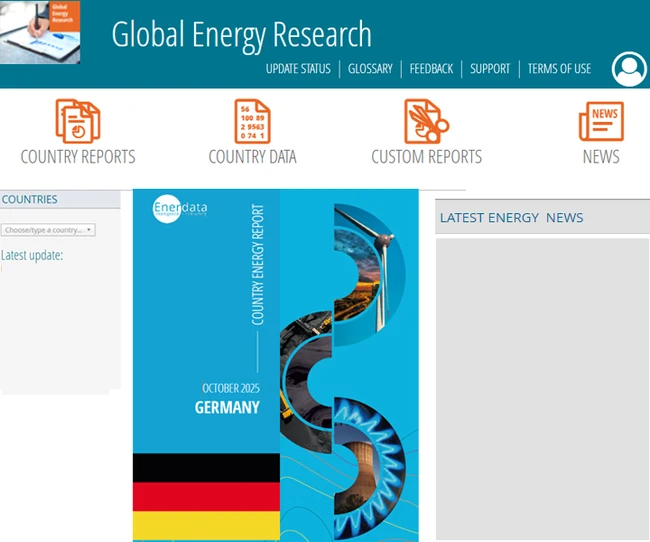
Interested in Global Energy Research?
Enerdata's premium online information service provides up-to-date market reports on 110+ countries. The reports include valuable market data and analysis as well as a daily newsfeed, curated by our energy analysts, on the oil, gas, coal and power markets.
This user-friendly tool gives you the essentials about the domestic markets of your concern, including market structure, organisation, actors, projects and business perspectives.