The German government has approved the renewable energy draft law, expected to limit the increase in electricity costs by slowing the growth of renewable additions (25% of the German power mix) and forcing new investors to take some financial risks. Under the draft law, the share of renewables in total electricity production is expected to reach 40-45% by 2025 and 55-60% by 2035, to offset the elimination of nuclear power by 2022. Annual capacity additions will be capped at 2.5 GW/year for onshore wind power and solar PV and at 6.5 GW for offshore wind parks. Moreover, renewable producers will have to compete with conventional power generators on the market from 2017. In addition, Germany agreed with the European Commission to continue some tax exemptions for large industrial consumers, which are currently exempted from the EEG surcharge (a €5.1bn tax credit which add 6.3%/kWh to the electricity bill of ordinary consumers). One third of the 2,100 companies currently enjoying the exemptions will have to relinquish it. The draft will be reviewed by the German Parliament and is expected to become law in August 2014.
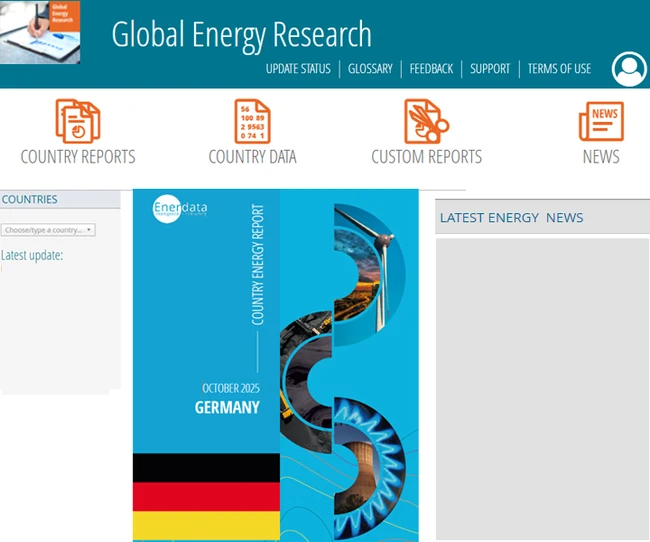
Interested in Global Energy Research?
Enerdata's premium online information service provides up-to-date market reports on 110+ countries. The reports include valuable market data and analysis as well as a daily newsfeed, curated by our energy analysts, on the oil, gas, coal and power markets.
This user-friendly tool gives you the essentials about the domestic markets of your concern, including market structure, organisation, actors, projects and business perspectives.