Germany’s federal cabinet has approved a draft law aiming at ending coal-fired power generation by 2038, in order to cut the country's greenhouse gas (GHG) emissions by 55% by 2030 compared to 1990. The German federal parliament, the Bundestag, is expected to adopt the text by mid-2020. The government will check how the coal phase-out works, focusing on power supply security, electricity prices, and climate protection, in 2022, 2026, 2029 and 2032. From 2026, it will check whether the phase out can be brought forward by three years, i.e. by 2035 instead of 2038. The new legislation foresees maximum phase-out compensation of €165,000/MW in 2020, falling to €155,000/MW in 2021-2022, and by 25%/year until 2026, reaching €49,000/MW. Compensations will end in 2026. CO2 emissions under the EU Emission Trading Scheme (ETS) related to these coal-fired power plants will be cancelled. The 1.1 GW Datteln 4 coal-fired power plant will still be commissioned; the project is in trial operations and could begin operations as soon as mid-2020.
The adoption of the coal exit law by the parliament will pave the way for enacting the bill for aid to the coal regions. Earlier in January 2020, the federal government and state governments of Brandenburg, Saxony, North-Rhine Westphalia and Saxony-Anhalt reached an agreement on the coal-fired power plant shutdown schedule and on financial compensation and structural aid for coal and lignite producing regions. Germany plans €40bn in compensation for coal and lignite producing states for the closure of the power plants and of related mine.
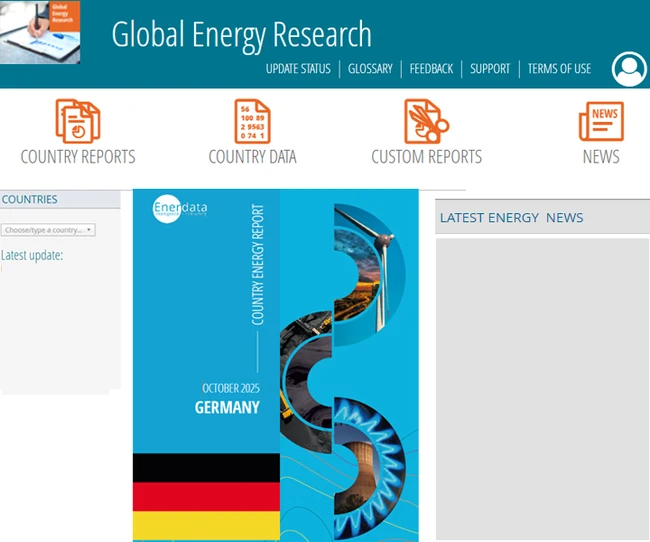
Interested in Global Energy Research?
Enerdata's premium online information service provides up-to-date market reports on 110+ countries. The reports include valuable market data and analysis as well as a daily newsfeed, curated by our energy analysts, on the oil, gas, coal and power markets.
This user-friendly tool gives you the essentials about the domestic markets of your concern, including market structure, organisation, actors, projects and business perspectives.