According to the U.S. Energy Information Administration (EIA), gas-fired power generation should surpass coal-fired generation in 2016 on an annual basis; the share of gas surpassed that of coal in the power mix on a monthly basis for the first time in April 2015 and their shares have remained nearly identical at around 1/3 of power generation since then.
This shift toward gas-fired generation is related to falling gas prices in a context of soaring shale gas production, that narrowed the gap between cheaper coal (much cheaper than gas between 2000 and 2008) and gas. Since 2009, the share of coal (around 45% of the power mix) has been falling, reaching 32% in 2015, to the advantage of gas. The share of coal in power generation increased with higher natural gas prices in 2013 and 2014, but the return to lower natural gas prices in 2015 favoured increased natural gas-fired generation and the share of coal-fired generation dropped again.
Environmental regulations are also contributing to the decline in coal-fired generation in the United States. Under the Clean Power Plan, due to take effect in 2022 but recently tayed by the Supreme Court pending the outcome of ongoing litigation, the operators of coal-fired power plants will have to either retire units or reduce their utilization rate to comply with requirements to reduce CO2 emissions from existing fossil fuel-fired power plants.
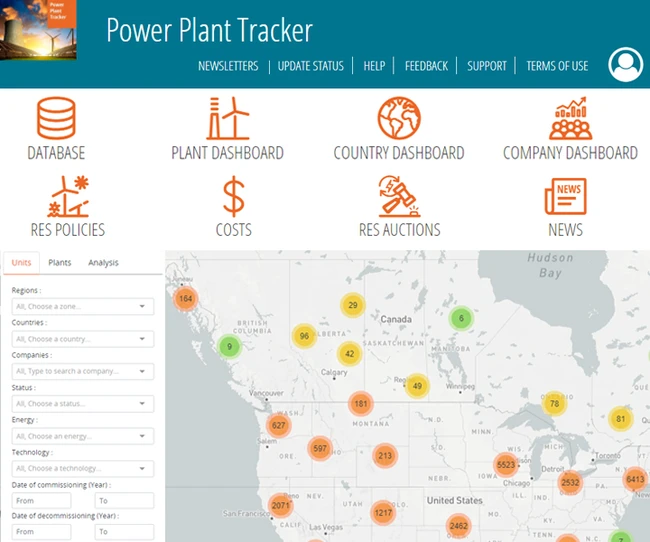
Interested in Power Plants?
Enerdata has developed a market research service to screen, monitor and analyse the development of power generation assets.
Power Plant Tracker offers an interactive database and a powerful search engine covering power plants worldwide – including both installed and planned capacities for renewables and fossil fuels.