CO2 emissions from fossil fuel combustion declined by 4.3% in 2019 in the European Union (not including the United Kingdom), mainly due to the substantial increase in the carbon price on the EU Emission Trading Scheme (EU ETS) in 2019 (over €25/tCO2), which incited power producers to use more gas and renewables and to import electricity. Energy-related CO2 emissions fell noticeably in Estonia (-22%), Denmark (-9%), Greece and Slovakia (-8.9% each), Portugal (-8.7%) and Spain (-7.2%), whereas they increased in four countries, namely Luxembourg (+7.5%), Austria (+2.8%), Malta (+2%) and Lithuania (+1.6%).
In 2019, greenhouse gas (GHG) emissions covered by the EU ETS declined by 8.7% in 2019. GHG emissions contracted by 15% in the power sector, in line with the substitution of coal-fired power generation with renewable and gas-fired generation, and they dipped by 2% in industry, including in energy-intensive branches such as iron and steel, cement, refineries and chemicals. Meanwhile, GHG emissions from aviation rose by 1% to to 68.14 GtCO2eq; the aviation sector benefited from 31.3 million free allowances, covering 46% of their emissions, while 54% had to be acquired from auctions or other sectors.
Interested in Power Plants?
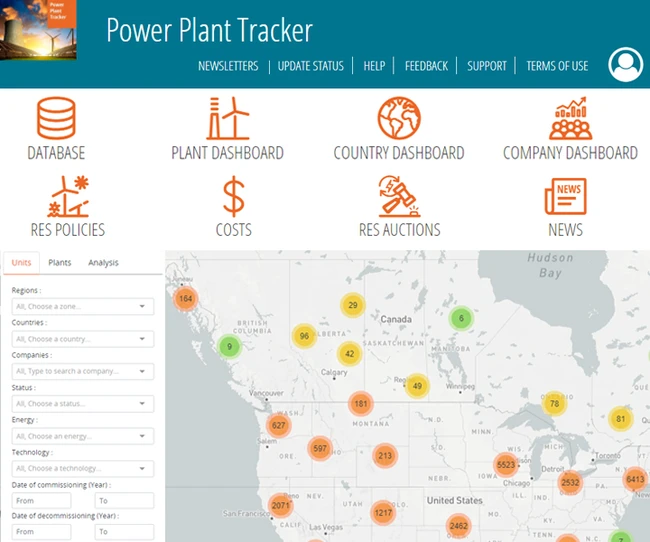
Enerdata has developed a market research service to screen, monitor and analyse the development of power generation assets.
Power Plant Tracker offers an interactive database and a powerful search engine covering power plants worldwide – including both installed and planned capacities for renewables and fossil fuels.