The European Parliament and the European Council have reached a political agreement on decarbonising the EU maritime transport. It requires to gradually cut CO2 emissions of large ship below the 2020 level (91.16 gCO2/MJ of energy used), by 2% as of 2025, 6% as of 2030, 14,5% as of 2035, 31% as of 2040, 62% as of 2045 and 80% as of 2050. The emission cap would apply to big ships (above a gross tonnage of 5,000), which account for 90% of maritime emissions, and to all energy used on board in or between EU ports, as well as to 50% of energy used on voyages where the departure or arrival port is outside of the EU or in EU outermost regions. The Commission will review the rules by 2028 to decide whether to extend emission-cutting rules to smaller ships or to raise the share of energy used by ships from non-EU countries. The new rules also set a 2% renewable fuels usage target as of 2034 and introduce an additional zero-emission requirement at berth, mandating container ships and passenger ships to use on shore power supply as of 2030 at major EU ports and as of 2035 for other EU ports.
In 2021, waterborne transport accounted for 3 to 4% of total CO2 emissions in the European Union. In December 2022 a provisional agreement included shipping emissions in the EU Emissions Trading System (EU ETS).
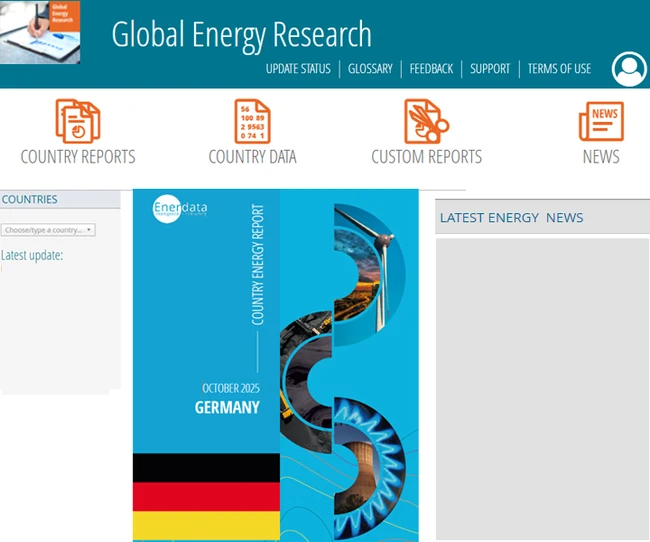
Interested in Global Energy Research?
Enerdata's premium online information service provides up-to-date market reports on 110+ countries. The reports include valuable market data and analysis as well as a daily newsfeed, curated by our energy analysts, on the oil, gas, coal and power markets.
This user-friendly tool gives you the essentials about the domestic markets of your concern, including market structure, organisation, actors, projects and business perspectives.