The European Commission has adopted a package of climate, energy, land use, transport and taxation policies aimed at reducing net greenhouse gas (GHG) emissions by at least 55% by 2030. First, the Commission plans to lower further the overall CO2 emission cap under the EU Emissions Trading System (ETS) and to raise its annual rate of reduction, while phasing out free emission allowances for aviation; the ETS should also align with the global Carbon Offsetting and Reduction Scheme for International Aviation (CORSIA) and would include shipping emissions. A new ETS should be set up for fuel distribution for road transport and buildings. Moreover, the size of the Innovation and Modernisation Funds should be increased.
In addition, EU Member States (MS) should invest their entire emission trading revenues on climate and energy-related projects, with part of the revenues from the new road transport and buildings ETS addressing the possible social impact on transport users, vulnerable households and microenterprise. Each MS will have strengthened emission reduction targets for buildings, road and domestic maritime transport, agriculture, waste and small industries, based on their GDP per capita, under the Effort Sharing Regulation. Moreover, the Regulation on Land Use, Forestry and Agriculture sets an overall EU target for carbon removals by natural sinks (around 310 MtCO2 by 2030), with national targets, in order to reach climate neutrality in the land use, forestry and agriculture sectors, including also agricultural non-CO2 emissions.
The Renewable Energy Directive will raise the renewable target to 40% of the EU's final energy consumption by 2030, with specific targets for transports, heating and cooling, buildings and industry. The Energy Efficiency Directive will set more ambitious binding annual targets for cutting energy consumption at the EU level, almost doubling the annual energy saving obligation for MS. In the road transport sector, CO2 emission standards for cars and vans will be implemented, to cut emissions of new cars by 55% from 2030 and 100% from 2035: as of 2035, all new cars registered will be zero-emissions. MS will thus have to expend their charging capacity by installing electric charging stations every 60 km and hydrogen refuelling stations every 150 km. In the aviation sector, the ReFuelEU Aviation Initiative will force fuel suppliers to blend rising levels of sustainable aviation fuels in jet fuel taken on-board at EU airports, including synthetic low carbon fuels, known as "e-fuels".
Finally, the Energy Taxation Directive will be revised to align the taxation of energy products with the EU energy and climate policies, removing exemptions and reduced rates currently encouraging the use of fossil fuels. A new Carbon Border Adjustment Mechanism will set up a carbon price on imports of a targeted selection of products, to avoid relocating EU's carbon-intensive production outside Europe. In addition, a new Social Climate Fund is to be implemented to help citizens financing investments in energy efficiency, new heating and cooling systems, and cleaner mobility.
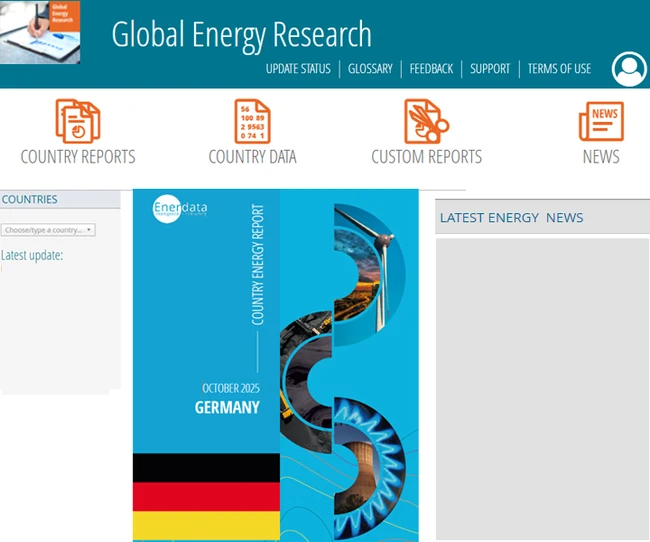
Interested in Global Energy Research?
Enerdata's premium online information service provides up-to-date market reports on 110+ countries. The reports include valuable market data and analysis as well as a daily newsfeed, curated by our energy analysts, on the oil, gas, coal and power markets.
This user-friendly tool gives you the essentials about the domestic markets of your concern, including market structure, organisation, actors, projects and business perspectives.