The European parliament has approved a law that requires Member States to push the renovation of buildings to make them more energy-efficient and reduce the EU's CO2 emissions to make the building sector climate neutral by 2050.
The proposed revision of the Energy Performance of Buildings Directive establishes that all new buildings should be zero-emission as of 2030, while new buildings occupied or owned by public authorities should be zero-emission as of 2028. Residential buildings will have to reduce their primary energy used by at least 16% by 2030 and at least 20-22% by 2035. Member states will have to renovate the 16% worst-performing non-residential buildings by 2030 and, by 2033, the worst-performing 26% through minimum energy performance requirements.
Solar installations should also be deployed progressively in public and non-residential buildings (if technically and economically suitable) depending on their size, and in all new residential buildings by 2030. Measures to decarbonise heating systems, with a view to phasing out fossil fuels in heating and cooling by 2040 will have to be outlined by member states, and subsidising stand-alone fossil fuel boilers will be prohibited as of 2025, with financial incentives still being available for hybrid heating systems that use a considerable share of renewable energy.
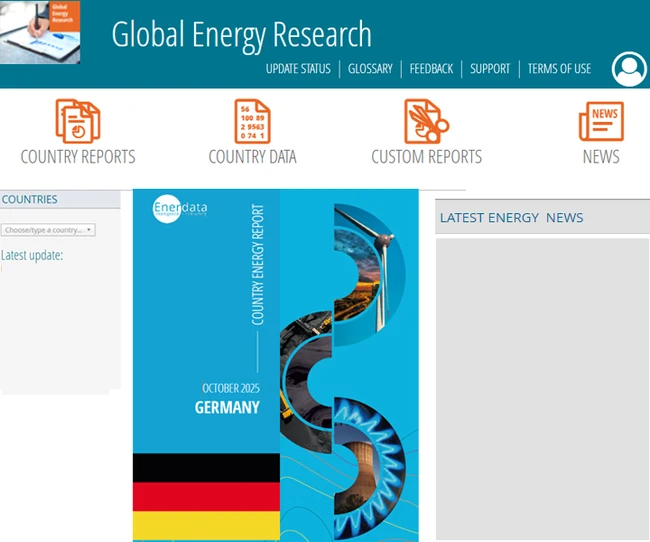
Interested in Global Energy Research?
Enerdata's premium online information service provides up-to-date market reports on 110+ countries. The reports include valuable market data and analysis as well as a daily newsfeed, curated by our energy analysts, on the oil, gas, coal and power markets.
This user-friendly tool gives you the essentials about the domestic markets of your concern, including market structure, organisation, actors, projects and business perspectives.