The European Commission and the United Kingdom have agreed to work towards linking their respective Emission Trading Schemes (UK ETS and EU ETS). The objective of the agreement is to address issues related to trade and a level playing field that had come up after the Brexit. Both parties are expected to launch their own Carbon Border Adjustment Mechanisms (CBAM) in 2026 (EU) and 2027 (UK) and the ETS linkage should deliver clear benefits to ETS participants, lower costs and reduce trade friction between them. The EU and the UK should clearly define the sectors falling in the scope of the ETS linking agreement, to avoid risks of carbon leakage and competitive distortions. This scope should include the sectors of power generation, industrial heat generation (excluding the residential building heating), industry, domestic and international maritime transport and domestic and international aviation, among others. In addition, the agreement should provide for a procedure to further expand the list of sectors to be covered by the linking agreement. The agreement also noted that the link should not constrain the EU and the UK from pursuing higher environmental ambition, consistent with their international obligations.
Interested in Global Energy Research?
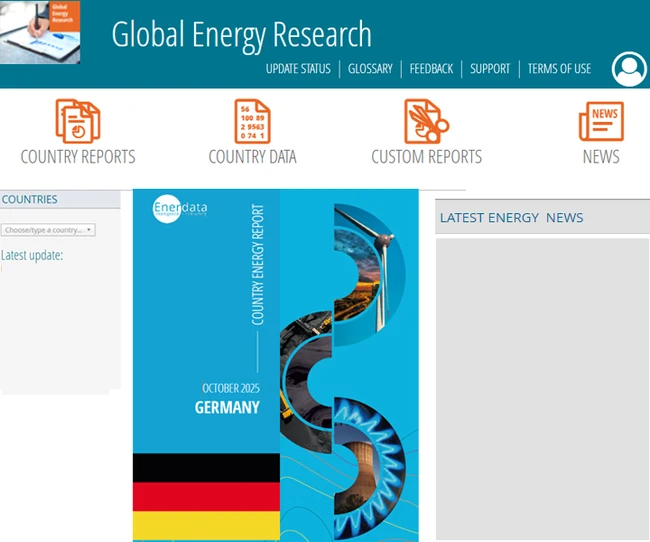
Enerdata's premium online information service provides up-to-date market reports on 110+ countries. The reports include valuable market data and analysis as well as a daily newsfeed, curated by our energy analysts, on the oil, gas, coal and power markets.
This user-friendly tool gives you the essentials about the domestic markets of your concern, including market structure, organisation, actors, projects and business perspectives.