The Energy Committee of the European Parliament has approved a proposed EU energy efficiency directive, which would introduce mandatory measures such as renovating public buildings and energy-saving schemes for utilities. The plenary vote is scheduled for September.
The new energy efficiency directive enshrines the 20% efficiency target in law and sets out binding measures that will help bridge the gap that the EU must close to meet its pledge to cut energy consumption by 20% by 2020. the main measures are the following:
- Renovating buildings: The directive would require Member States to renovate 3% of the total floor area of public buildings, with a "total useful floor area" of more than 500 m², and as from July 2015, of more than 250 m². However, Member States would also be able to use alternative means to achieve equivalent energy savings, e.g. thorough renovation.
- Energy efficiency schemes for utilities: Energy companies covered by the directive would have to achieve a "cumulative end-use energy savings target" by 2020, to be at least equivalent to achieving new savings, each year, from 2014 to 2020, of 1.5% of annual energy sales to final customers, by volume, and averaged over the most recent three-year period before the directive takes effect. Sales of energy used in transport could be excluded and alternative ways to achieve equivalent energy savings would be permitted, provided that equivalence is maintained.
- Energy audits: All large enterprises would be required to undergo an energy audit. These audits would need to start within three years of the directive's entry into force and should be carried out every four years by qualified and accredited experts.
- Billing customers for real consumption: To help customers to save energy, suppliers would have to ensure, by 1 January 2015, that billing information is accurate and based on actual consumption. Bills would arrive at least twice a year, or quarterly, upon request.
- Promoting efficiency in heating and cooling: Member States would need to carry out and notify to the Commission a "comprehensive assessment", by December 2015, of the scope for applying high-efficiency cogeneration and efficient district heating and cooling. For the purposes of this assessment, Member States would need to carry out a cost-benefit analysis - a proposal introduced by MEPs - covering their territory based on climate conditions, economic feasibility and technical suitability.
- EU and National targets: The directive lays down common measures to ensure that the EU makes progress towards its headline target of using 20% less energy by 2020Each Member State would set its own target and present a national efficiency action plan every three years, in 2014, 2017 and 2020. The European Commission would have to assess, by June 2014, the progress achieved.
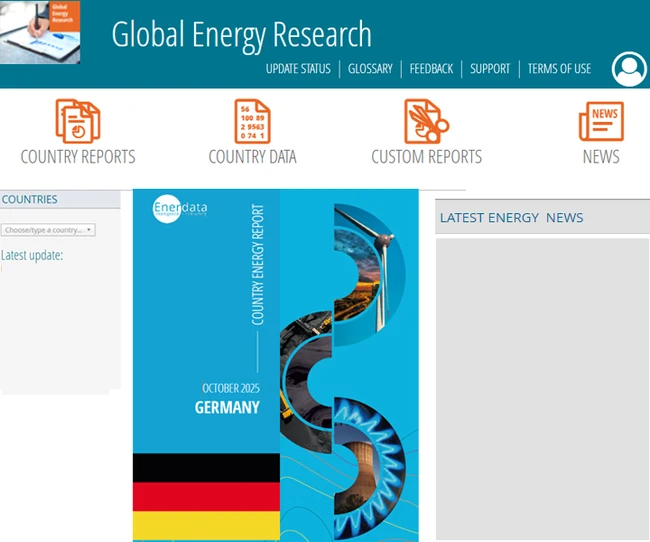
Interested in Global Energy Research?
Enerdata's premium online information service provides up-to-date market reports on 110+ countries. The reports include valuable market data and analysis as well as a daily newsfeed, curated by our energy analysts, on the oil, gas, coal and power markets.
This user-friendly tool gives you the essentials about the domestic markets of your concern, including market structure, organisation, actors, projects and business perspectives.