Egypt, Ethiopia and Sudan have reached an initial agreement on the 6,450 MW Grand Ethiopian Renaissance Dam (GERD) project under the auspices of the US Department of Treasury. The initial agreement covers technical details on the dam filling conditions: filling will be carried out in stages, in an adaptative and cooperative manner taking into consideration the hydrological conditions of the Blue Nile and the potential downstream impacts, during the wet season (July-August, potentially September) and an effective coordination mechanism and provisions for settling disputes will be implemented.
Ethiopia started to build the giant hydropower project on the Nile River in May 2011 (initially designed as a 5,250 MW project but later upgraded to 6,450 MW), arousing a fierce opposition from neighbouring Egypt and Sudan, which considered that it violates a colonial-era agreement giving them rights to 90% of the Nile's water (Ethiopia claims to be the source of about 85% of the total water in the Nile). In 2013, Ethiopia started to divert a stretch of the Blue Nile River for the project, which was expected in 2015. However, tensions over the project have delayed it and the first two turbines, with a combined capacity of 750 MW, are expected to generate first power in December 2020 (commissioning in 2022 at the earliest).
Interested in Power Plants?
Enerdata has developed a market research service to screen, monitor and analyse the development of power generation assets.
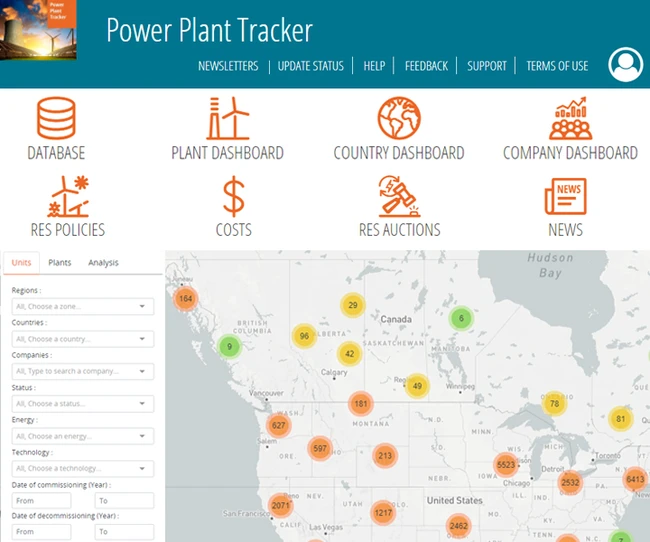
Power Plant Tracker offers an interactive database and a powerful search engine covering power plants worldwide – including both installed and planned capacities for renewables and fossil fuels.