The US Energy Information Administration (EIA) has forecasted that the capacity of coal-fired power plants in the United States will more than halve from 2022 levels by 2050 due to environmental regulations raising costs and new power plants powered by natural gas and renewable energy displacing the ageing fleet.
The EIA’s Annual Energy Outlook 2023 presents three scenarios projecting that coal-fired capacity will decline by 52% to 88% to between 97 GW and 23 GW by mid-century. It includes retiring coal-fired capacity of about 99 GW to 159 GW and a small amount of coal-fired capacity that is expected to be converted to natural gas-fired capacity. Out of the retiring capacity, 61 GW come from coal-fired plants that their owners and operators have already planned to retire.
The EIA predicts that the combined capacity from solar and wind will more than triple by 2050, making up between 40% and 69% of US power mix. Because coal can generate electricity consistently, without being dependent on the fluctuating availability of wind or sunlight, it is projected to continue contributing between 1% and 8% of the total electricity generation in 2050.
Interested in Power Plants?
Enerdata has developed a market research service to screen, monitor and analyse the development of power generation assets.
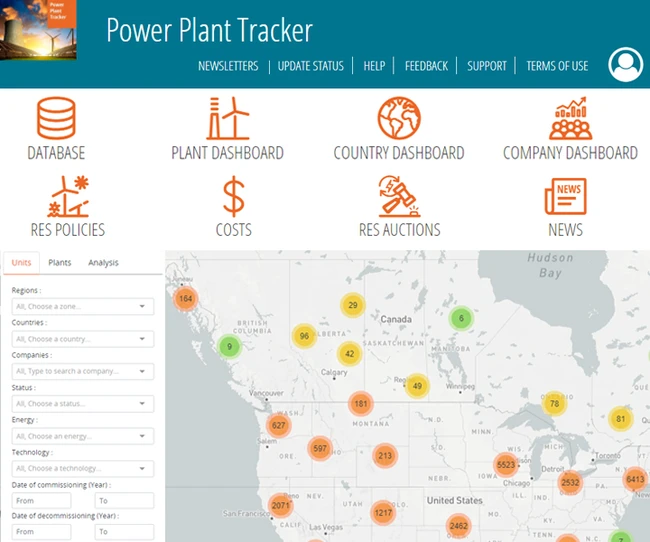
Power Plant Tracker offers an interactive database and a powerful search engine covering power plants worldwide – including both installed and planned capacities for renewables and fossil fuels.