The world’s largest compressed-air energy storage (CAES) project has begun operations in Jiangsu province, central China (Harbin Electric Group press release, 27/01/2026). The facility has an installed power output of 600 MW and a storage capacity of 2.4 GWh, with expected electricity generation of approximately 792 GWh/year.
Known as the Guoxin Suyan Huai’an Salt Cavern Compressed Air Energy Storage Demonstration Project, the plant comprises two 300 MW non-combustion CAES units. The system operates by compressing air and injecting it into underground salt caverns during periods of low demand, typically at night. The stored air is then released during peak demand hours to drive turbines and generate electricity. The 2.4 GWh adiabatic system stores electricity without burning fuel, relying instead on air compression and the capture of heat generated during the process. Heat management is achieved through advanced molten salt and pressurised thermal water storage technologies, enabling a reported conversion efficiency of 71%, according to Harbin Electric.
China’s energy storage sector is expanding rapidly, propelled by the country’s large-scale deployment of renewable energy. In September 2025, the National Development and Reform Commission (NDRC) released a strategy to accelerate the development of a new power system for the 2024–2027 period, emphasizing the role of battery energy storage systems (BESS) and supporting their domestic production and deployment.
Under this plan, investment of around CNY250bn (approximately US$35bn) is expected by 2027 to bring total BESS capacity to 180 GW. The strategy is driving rapid growth in battery storage while also supporting the deployment of alternative long-duration storage technologies such as compressed air. China had initially set an energy storage target of 30 GW for 2025, which was reached in 2023.
Interested in Power Plants?
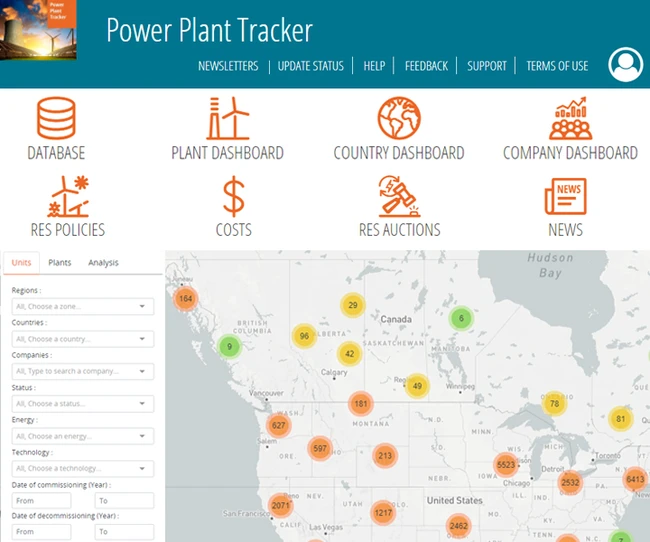
Enerdata has developed a market research service to screen, monitor and analyse the development of power generation assets.
Power Plant Tracker offers an interactive database and a powerful search engine covering power plants worldwide – including both installed and planned capacities for renewables and fossil fuels.